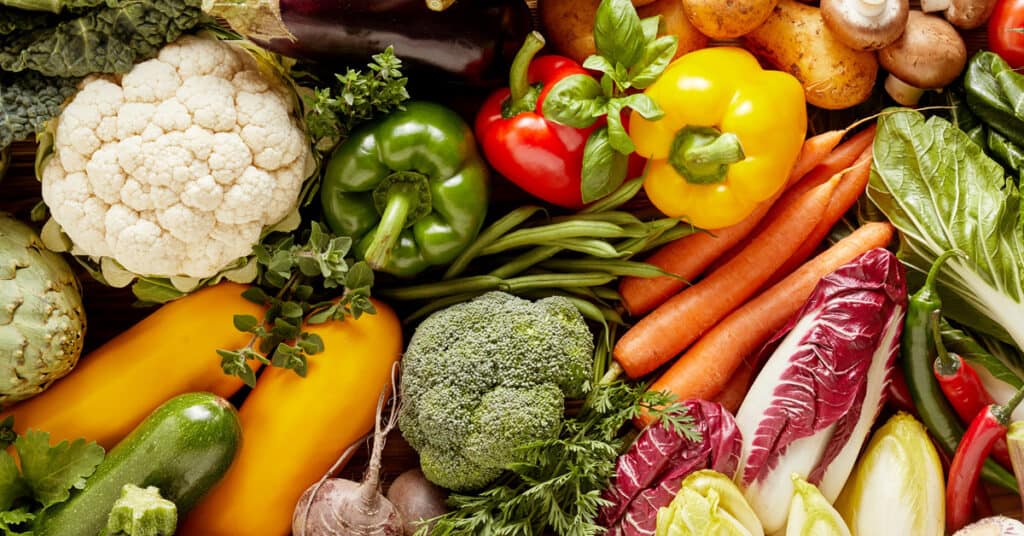
You can store many vegetables without refrigeration for a week to a month or more, depending on the vegetable and how you handle it. Carrots, cabbage, peppers, potatoes, onions, and more all do well at room temperature with a little care.
This guide covers the most common ones: how long each lasts and exactly how to store it. It’s useful whether you’re camping, on a boat, in an RV, or just trying to free up space in a crowded fridge.
Start at the Store: How to Buy Vegetables for Longer Storage
Making produce last without refrigeration starts before you ever get home. This part is easy to overlook, but it’s where long storage is won or lost.
Buy Never-Refrigerated Vegetables if You Can
Farmer’s markets and produce stands are your best bet. Once a vegetable has been refrigerated, it has a shorter life. As it warms, condensation forms and rot sets in. The storage times below assume never-refrigerated produce. Refrigerated produce still works; simply plan to use it sooner.
Be Picky
Go through items individually and turn down anything bruised, overripe, or with insect holes. Only the freshest, most perfect vegetables will make it through a long stretch without refrigeration.
Don’t Buy More Than You Have Room For
Overstuffed storage means bruising, and bruising means rot. Be realistic about your space before you load up.
Transport gently
A bruised spot starts to rot almost immediately and spreads. Use tote bags rather than plastic, put the sturdiest vegetables on the bottom, and don’t overstuff.
To Wash or Not to Wash
There are two schools of thought here.
Washing before storage means everything is ready to use when you want it. The argument against it is that produce lasts longest with the least handling.
In practice, I wash my vegetables before storing them, whether they’re going in the refrigerator or not. The key is getting them completely dry before putting them away, because damp vegetables rot rather than keep. As you work through them, you’ll almost always find a piece or two that needs to go straight into that night’s dinner, which is useful to know right away.
Storage Basics
Storage areas need to be well-ventilated, dry, and as dark as possible.
Bins with solid bottoms and ventilated sides work well in any setting. A solid bottom contains the mess if something does rot. Don’t use plastic lids: a light towel or rag laid over the top gives much better ventilation and lets you fit more in the bin. Gear hammocks are good on a boat as long as they’re padded and hung where they won’t bang into anything.
Avoid plastic bags entirely. They trap moisture, and the food rots. I’ve tried the green bags marketed for produce and had the same results.
Check your produce every day. If something is bruised, move it to the top of the menu. Anything that’s started to rot needs to come out immediately, and wipe the container with a dilute bleach solution so it doesn’t spread. If you see fruit flies, check everything extra carefully, since bugs are drawn to produce that’s bruised or spoiling.
The same buying, drying, and daily-check habits apply to fruit. I cover that separately in Storing Fruit without Refrigeration.
Storage Tips for Specific Vegetables
Each type of vegetable has its own storage needs. Here are a few common veggies with my best tips for making them last without a fridge.
Carrots
They keep one to two weeks, often more. They’ll last a few days with no special treatment, but for longer storage, wrap them loosely in aluminum foil, leaving the ends open so moisture can escape, or wrap them in a slightly damp tea towel. If they dry out and look wilted, stand them in a glass of water for half an hour or so to bring back the crunch. The water doesn’t need to be cold, despite what you may have been taught.
Lettuce
Lettuce is the hard case: it really does need refrigeration. It bruises extremely easily while traveling, even when chilled in a cooler, and bruised leaves rot fast. Eat it within a day or two of buying. Whole romaine leaves or full heads sold in plastic boxes last a bit longer than loose or picked greens. For a little more life, you can stand whole heads stem-down in a bucket with a few inches of water and a light cloth over the top, which can stretch them to four or five days. This is also why cabbage, further down, becomes the salad staple once lettuce is gone.
Broccoli
It lasts about a week, but only if it’s never been refrigerated. Once it’s been chilled and taken back out, it spoils in a day or two, because you can’t get all the nooks and crannies dry of condensation. Don’t wash until you’re ready to use it. It may yellow a little; just cut the discolored parts off. If it’s less than perfect, use it in a cooked dish where it won’t be noticeable.
Cauliflower
Cauliflower keeps the same way as broccoli, about a week, and with the same catch: only if it’s never been chilled. Don’t wash until you’re ready to use it. Cauliflower may get some black spots over time. Cut those off and use the rest in a cooked dish if it’s looking less than perfect.
Cabbage
It lasts a month or more, which makes it one of the most valuable vegetables you can carry. Store the whole head somewhere dry and ventilated where it won’t get bumped. It does fine left on its own; just keep it out of plastic, which traps moisture and causes rot. Peel off outer leaves as they dry or tire, and if the cut edge develops black spots, slice a thin piece off and use the rest. Because lettuce barely keeps at all without refrigeration, cabbage becomes the salad staple. I’ve written a full guide on how long cabbage lasts without refrigeration, including its nutrition value on long trips and how to crisp it back up if it goes limp.
Summer Squash and Zucchini
Fragile squash last ten days or sometimes longer, and smaller ones keep much better than large ones. If they start to wilt, use them in a cooked dish instead of raw, and you won’t notice the difference.
Cucumbers
Cukes last up to a week uncut, between about 40°F and 68°F, wrapped tightly in plastic wrap and protected from bruising. The warmer it gets, the shorter that window, even when wrapped. Once cut, use them within a day or two.
Celery
Store it exactly like carrots: wrapped loosely in foil with the ends open, or in a damp tea towel. It’s a little more temperamental, so plan to use it within a week to ten days. Limp celery crisps right back up with a soak in water, the same as carrots. For the full breakdown, I’ve written a separate piece on how to store celery.
Peppers
Whole bell peppers last at least a week if padded well so they don’t bruise, but once cut, they go fast, so use any leftover within a day and trim the cut edges before using again. Mini sweet peppers are the better choice without refrigeration, since you can use a whole one at a time. They last ten days to three weeks if kept cool and protected from bruising. Leave them in the bag they come in, which has holes to let condensation escape. They may look a little wilted after ten days, but still taste fine, and work especially well in cooked dishes at that point.
Tomatoes
These keep up to about two weeks if you buy them at varying stages of ripeness, from fully green to ripe, depending on when you want to eat them. Fully green ones take roughly two weeks to ripen; partially ripe ones less. Store the not-yet-ready ones in the dark, wrapped in newspaper or paper towels, or in a tube sock with the greenest one pushed in first and progressively riper ones behind it, so you can pull from the open end as they’re ready. Check daily, unwrap when ripe, and eat within two days of full ripeness. Don’t refrigerate tomatoes; cold dulls their flavor.
Potatoes
Potatoes are one of the longest-lasting vegetables: two to three months in cool climates, about a month in the tropics. Store them somewhere cool, dry, and dark so they don’t turn green. A towel over the bin works; a plastic bag doesn’t, because condensation forms and they rot. Keep them away from onions, and avoid wire baskets that create bruising pressure points. If a potato turns greenish, peel that part away before using. If one goes slightly soft or spongy but isn’t rotten, it’s just dried out and will rehydrate as it cooks.
Onions
Keep onions in a dark, dry area so they don’t sprout. One popular method is to put them in pantyhose with a knot tied between each one, then cut them apart as you need them. You can also store them in a ventilated bin with a cloth over the top, never plastic over the top. Don’t store onions and potatoes together, or the potatoes will sprout.
Avocados
They bruise easily and need careful handling to last beyond a day. The best method I’ve found is to put them in tube socks, then in a gear hammock or bin on top of padding over sturdy produce like potatoes or onions. Buy them at varying stages of ripeness, some still rock-hard, and you can enjoy them over a week or more. Once one is fully ripe, eat it within a day. Expect about one in four to bruise badly enough to be inedible, and don’t try to save part of a cut avocado without refrigeration.
Garlic
It lasts months in a cool, dry, ventilated spot. It doesn’t need to be kept dark, but keep it out of plastic or anything that traps moisture, which makes it sprout or rot. At a farmer’s market, look for cured garlic with dry, brown, or fallen-off tops. Green tops mean it isn’t fully cured and will only last a few weeks.
Green Onions, Scallions, and Leeks
These aromatics store like cut flowers: stand them in a glass of water. Change the water every few days, and don’t be surprised if they keep growing. If you use only the green tops, put the white root ends back in the water, and the tops will grow back several times. If your water smells of chlorine, let the glass sit a few hours before adding them.
Mushrooms
Mushrooms are unpredictable: sometimes they keep well, sometimes not, for no obvious reason. Don’t wash them until you’re ready to use them. To store without a cooler, take them out of the package and spread them no more than two deep in a flat, uncovered container in a very well-ventilated spot. They’ll dry out day by day but stay good for cooking, sometimes for a month or more. Turn them every day or two so they dry evenly. Use dried ones in cooking rather than raw, and toss any that turn slimy.
Take the Guesswork Out of Your Next Trip
This article covers the vegetables most people ask about. My book covers the rest.
Storing Food Without Refrigeration includes a “shortest to longest lasting” table for dozens of fruits and vegetables, so you can plan exactly what to eat first and what to save for the end of a trip. It goes well beyond produce, too: eggs, butter, milk, cheese, sour cream, condiments, and meat all keep far longer than you’d expect without refrigeration when you handle them right. You’ll also find 60+ meal ideas and a four-day sample meal plan.
It’s a practical tool worth reading before you head out and referring back to when you have a question.
- PDF from our store — download immediately, start reading today
- Paperback from our store
- Paperback from Amazon

Carolyn Shearlock has lived aboard full-time for 17 years, splitting her time between a Tayana 37 monohull and a Gemini 105 catamaran. She’s cruised over 14,000 miles, from Pacific Mexico and Central America to Florida and the Bahamas, gaining firsthand experience with the joys and challenges of life on the water.
Through The Boat Galley, Carolyn has helped thousands of people explore, prepare for, and enjoy life afloat. She shares her expertise as an instructor at Cruisers University, in leading boating publications, and through her bestselling book, The Boat Galley Cookbook. She is passionate about helping others embark on their liveaboard journey—making life on the water simpler, safer, and more enjoyable.
Leave a Reply