
You can have real milk on your boat even without refrigeration. Whether you have no fridge at all or just want to free up precious cold storage space, you have two solid options: boxed milk and good powdered milk.
“Powdered milk?”, I hear you screaming. “YUCK!” No, not the chalky nonfat stuff from the baking aisle that you tried on some long-ago camping trip, but actually good powdered milk that tastes right and performs well in cooking. We’ll show you exactly where to find it.
Both options are shelf-stable, widely available, and work just like regular milk.
Boxed Milk
If you’re going to be away from grocery stores for more than a few days, boxed milk can be a lifesaver.
It’s widely available in developing countries where refrigeration is limited. But you can find it in many US stores, too, if you know where to look.
I’ve found it at my local Publix (usually in the coffee aisle) and at Walmarts across the country when we’ve taken extended camping trips (typically in the baking aisle). I’ve also spotted it in various chain groceries and even once at a convenience store along the ICW.
Why Boxed Milk Works So Well Aboard
Boxed milk sits on regular shelves because it doesn’t need refrigeration until you open it. Unopened, it’s good for at least 3 months — and I’ve used boxes that were over 6 months old with no problems.
It’s real milk. It’s been ultrapasteurized and sealed in a TetraPak that keeps air out completely. Use it just as you would any other milk: on cereal, in cooking, or to drink straight. Most people notice no difference at all in cooking or on cereal. Some notice a very slight difference when drinking it plain; Dave didn’t.
(We now use boxed almond milk, since Dave developed a milk allergy.)
You can stash the boxes almost anywhere. We had shallow lockers behind the settees that were perfect for stacking them. They fit into all kinds of odd spaces; you just have to remember where you put them.
What to Look For
Here in the US, the most common brand is Parmalat, available in 2% and whole milk. In Mexico and Central America, you’ll find numerous brands, including a Nestlé skim milk called Svelty.
Most boxes now have a screw top, which works well on boats, but occasionally you’ll find one with a flip-top. On a boat, the flip tops (pictured) can jostle open easily in a locker or cooler.
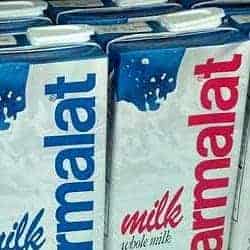
A few options for managing it:
- Put a piece of duct tape over the flip-top if you’re in protected conditions
- Transfer the milk to a clean juice bottle with a screw top (what I usually did)
- Screw-top boxes are becoming easier to find and are better for boats, though they can be trickier to stow since the top protrudes
In Mexico, we sometimes ran into boxes that were just “cut to open” — those have to go straight into another bottle.
Before opening any new box, shake it well. Some of the milk solids can settle during storage.
Single-Serving Boxes
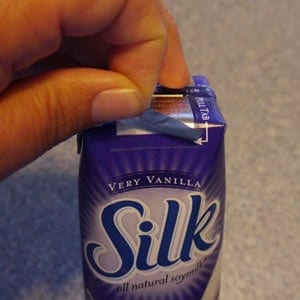
Single-serving boxes — the kind marketed for kids’ school lunches — are worth keeping on hand too. They come in plain, vanilla, strawberry, and chocolate, and include a straw.
Rather than piercing the foil with the straw and trying to pour through the hole, peel the whole foil top off from one edge. Much cleaner and far less likely to end up on your shirt.
Each box holds about one cup. That’s plenty for one bowl of cereal, or two smaller ones. We allowed one per person and drank any leftover milk that didn’t go on cereal.
They usually come in 4-packs. Not cheap, but better than throwing away three-quarters of a liter box when you only need a small amount.
Powdered Milk
Powdered milk isn’t my first choice for drinking or cereal: boxed milk wins there. But good powdered milk is excellent for making yogurt, baking, mashed potatoes, biscuits, and anything else that calls for milk in a recipe.
The advantages aboard are hard to beat: it takes up far less space than boxed milk, weighs almost nothing, and lasts practically forever. No refrigeration needed.
Finding Good Powdered Milk in the US
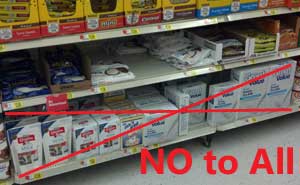
Skip the regular grocery aisle. The nonfat dry milk you’ll find there — usually in the baking section — takes overnight to dissolve and doesn’t taste good. Don’t waste your money on it.
Instead, head to the Latin or Mexican foods aisle. That’s where you’ll find the good stuff. Everywhere I’ve ever traveled outside the US, great powdered milk is easy to find. I have no idea why it’s considered a foreign food here.
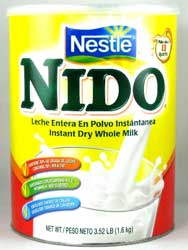
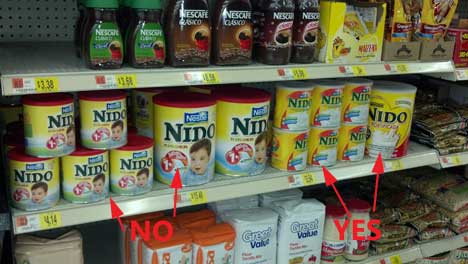
Nido (Amazon) is made by Nestlé and actually tastes good. It’s whole milk, which means more calories, but also better flavor and better results in cooking.
Look for regular Nido, sometimes labeled Classico or Fortificado. That’s just plain powdered whole milk. Avoid Nido Kinder — it has added fat, prebiotics, and flavorings that prevent yogurt from culturing properly. Other varieties sometimes have similar issues, so unless you have a specific reason to choose one of them, stick with the regular.
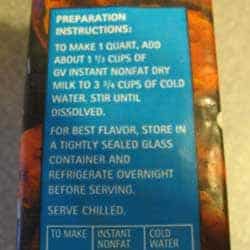
A quick rule of thumb for any brand: if the label says to refrigerate overnight before serving, it’s the bad kind. Pass on it.
Finding Powdered Milk While Cruising
Outside the US, great powdered milk is everywhere. Nido is available at practically every little tienda in Mexico and Central America. In areas with limited electricity, you’ll consistently find excellent non-refrigerated foods: it’s one of the quiet benefits of cruising off the beaten path.
If you ever come across New Zealand powdered milk, it’s fantastic, though it’s closer to cream in calories.
Look for “instant” on the label as a positive sign. The ones that suggest sitting overnight before serving are the ones to avoid.
What to Do With Powdered Milk
The most popular use aboard is making your own yogurt. Powdered milk produces excellent results, and homemade yogurt is better than most store-bought. See my full guide: Make Your Own Yogurt on Your Boat.
Beyond yogurt, powdered milk works beautifully in cakes, cookies, mashed potatoes, biscuits, and anything else that calls for milk. You’ll save a lot of locker space and weight. Friends who take cream in their coffee have told me that a spoonful of Nido beats Coffee-Mate easily. And in a pinch, it’s perfectly fine to drink.
Putting It All Together
Both options earn their place aboard. Here’s how to think about it:
- Larger boxed milk: ideal if you drink a lot of milk or have a family or guests aboard
- Single-serving boxes: good insurance for a small crew: no waste, no leftover milk going bad
- Powdered milk: the best choice for cooking, baking, and yogurt-making; takes almost no space
And even if you do have refrigeration, boxed milk is one of the easiest ways to free up fridge space as you only need one open box cold at a time.
Want to Go Further?
If you’re cooking and provisioning with little or no refrigeration, my course Eating Well with a Tiny Fridge covers exactly this: what to safely store outside the fridge, how to provision for 2 to 3 weeks at a time, and how to eat well without constant grocery runs. It includes a copy of Storing Food Without Refrigeration, which covers hundreds of foods, including dairy, produce, eggs, meat, condiments, and more.
If you’d prefer just the book:
- Storing Food Without Refrigeration — paperback or PDF from our store
- Storing Food Without Refrigeration — paperback from Amazon

Carolyn Shearlock has lived aboard full-time for 17 years, splitting her time between a Tayana 37 monohull and a Gemini 105 catamaran. She’s cruised over 14,000 miles, from Pacific Mexico and Central America to Florida and the Bahamas, gaining firsthand experience with the joys and challenges of life on the water.
Through The Boat Galley, Carolyn has helped thousands of people explore, prepare for, and enjoy life afloat. She shares her expertise as an instructor at Cruisers University, in leading boating publications, and through her bestselling book, The Boat Galley Cookbook. She is passionate about helping others embark on their liveaboard journey—making life on the water simpler, safer, and more enjoyable.
Leave a Reply