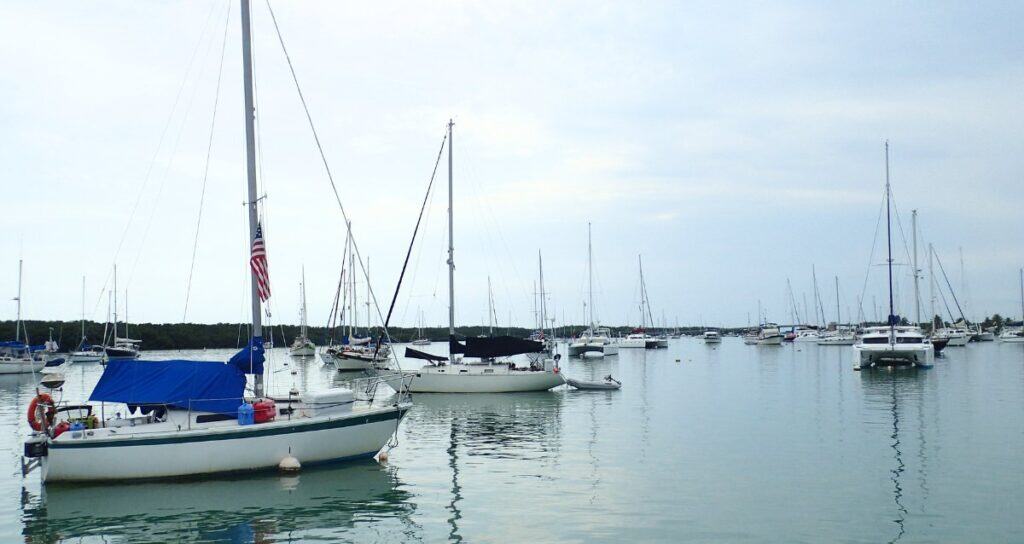
What do you do if you have to leave your boat for a while?
Maybe it’s a side trip away from your cruising route. Maybe you’re visiting family, dealing with a medical situation, or leaving the boat behind for part of the season. Whatever the reason, most boat owners eventually face the same question: who’s going to keep an eye on the boat while I’m gone?
Leaving a boat unattended for even a short period can be risky. Lines chafe. Batteries discharge. Canvas tears. Small leaks turn into big problems if no one notices them early. That’s why having a boat watcher matters so much.
A boat watcher is simply someone who agrees to check on your boat while you’re away. In many marinas and mooring fields, designating a boat watcher isn’t just a good idea, it’s a requirement anytime you’ll be gone overnight.
For longer absences, especially weeks or months, it often makes sense to hire a professional boat watcher. These are people who do this as a service and are familiar with a wide range of boats and systems. For shorter trips, though, most cruisers rely on friends. It’s usually an informal arrangement, based on trust and the understanding that these favors tend to come back around.
Boat watching isn’t about fixing every possible problem. It’s about having someone who can notice changes, catch issues early, and let the owner know what’s going on before a minor situation becomes a major one.
What a Boat Watcher Needs to Know
If someone asks you to watch their boat, the most important thing you can do is get clear information before they leave. You don’t need to know every system on board, but you do need enough knowledge to recognize when something isn’t right.
Start with basics. Make sure you have the owner’s full name and phone number, and confirm the best way to reach them. Is texting okay? Do they prefer a call? Is there a backup contact if they’re hard to reach?
Before they go, take a walk through the boat with them. This step is critical. Even a quick orientation can save a lot of confusion later.
Learn how to start the engine, even if you don’t expect to run it. Know whether the engine seacock is normally open or closed, where it’s located, and how to operate it if needed. If the boat is at anchor or on a mooring, ask how the windlass works and whether there’s a spare anchor aboard.
You should also know how to get inside the boat if something seems wrong. Is there a spare key hidden somewhere? A lock combination? A particular hatch that’s easiest to access? Sorting this out in advance avoids awkward and stressful situations later.
Power, Water, and Other Systems
Electrical systems are one of the most common sources of anxiety for boat watchers. You don’t need to be an expert, but you do need clarity.
Ask whether you’re expected to monitor the batteries. If so, how will you know there’s a problem? Is there a battery monitor, an alarm, or a simple visual cue? If charging might be needed, find out exactly how it should be done. Shore power only? Engine? Generator? Guessing here can cause real damage.
If the boat has a watermaker, ask whether it needs a freshwater flush while the owners are gone. If it does, make sure you understand exactly how and when to do it. This is one of those tasks that’s straightforward once you’ve been shown, and very easy to mess up if you haven’t.
Also ask about the dinghy. Where will it be left? Tied alongside, hoisted, or on a dock? If they’re leaving it at the dinghy dock, would they like you to tow it back to the boat? Yes, watching the dinghy is part of the job!
Finally, clarify any extra responsibilities. Do you need to pick up mail or packages? How long do they expect to be gone? Make sure you’re actually available for the entire time. It’s far better to say no upfront than to realize later you can’t follow through.
What a Boat Watcher Actually Does
At its core, boat watching is about noticing changes.
On whatever schedule you’ve agreed to, take a good look at the boat. Lines should be secure and not chafing. Canvas should be intact. The boat should be sitting normally in the water, with the waterline where it always is.
If you’ve agreed to monitor batteries or perform freshwater flushes, do those tasks on the schedule you discussed. Consistency matters.
After squalls or strong winds, take a closer look. Check for chafed lines, dragging anchors, torn canvas, or sails that have started to unroll. If you can get inside the boat, check for leaks and look at the bilge. Catching a small problem early can prevent a very expensive one later.
If it rains heavily, check the dinghy and bail it if needed. A swamped dinghy is a common and unpleasant surprise for returning owners.
One of the most reassuring things you can do as a boat watcher is send periodic photos. A quick snapshot showing that everything looks normal can provide huge peace of mind to someone who’s far away.
And if something doesn’t look right, or you’re unsure what you’re seeing, contact the owners promptly. Boat watching isn’t about solving every problem yourself. It’s about being the eyes and ears that allow the owner to decide what to do next.
If You’re the One Leaving Your Boat
Boat watching works best when the owner does their part, too.
Clear instructions, written down if needed, are a kindness. Labeling key switches, leaving notes about anything unusual, and explaining what’s normal for your boat all make the job easier.
It’s also a nice gesture to give your boatwatcher any food that might spoil while you’re gone, or to offer some other token of appreciation. Most people are happy to watch a friend’s boat simply because that’s what cruisers do. Still, acknowledging the effort matters, especially if your boat watcher has had to do more than just a quick visual check.
Why Boat Watching Matters
Boats are complex, and even when everything is set up properly, things can go wrong. Lines chafe. Batteries discharge. Water finds its way in where it doesn’t belong.
A boat watcher won’t prevent every problem, but they dramatically reduce the chance that a small issue turns into a disaster. Just as important, they provide peace of mind, which is hard to put a price on.
For many cruisers, being a boat watcher is just another quiet way we look out for one another. It’s not glamorous, and it doesn’t usually make for great stories. But it’s one of the reasons cruising communities work as well as they do.
Just one more way that cruisers help cruisers.
Boat watching is just one example of the everyday realities that come with living on a boat.
Our online course, The Basics of Living on a Boat, walks through the day-to-day routines, systems, and practical details of life aboard—so you’re better prepared for situations like this before they catch you by surprise.


Carolyn Shearlock has lived aboard full-time for 17 years, splitting her time between a Tayana 37 monohull and a Gemini 105 catamaran. She’s cruised over 14,000 miles, from Pacific Mexico and Central America to Florida and the Bahamas, gaining firsthand experience with the joys and challenges of life on the water.
Through The Boat Galley, Carolyn has helped thousands of people explore, prepare for, and enjoy life afloat. She shares her expertise as an instructor at Cruisers University, in leading boating publications, and through her bestselling book, The Boat Galley Cookbook. She is passionate about helping others embark on their liveaboard journey—making life on the water simpler, safer, and more enjoyable.
Leave a Reply