When you leave at the end of the season, for a family visit, or any other reason, will you remember how you left your boat?
Don’t assume. Anyone can forget. We joke and call it “cruiseheimers” . . . but it can be a serious problem. Luckily, we have a few easy suggestions (labeling, taking photos, checklists, and leaving alarms) that can help.
Problems if You Forget How You Left Your Boat
Forgetting to do something crucial when you return to your boat can lead to anything from minor inconveniences to devastating results.
- If you closed the seacock to the engine and forget to open it before starting it up, you can burn up the engine (ouch – $$!)
- Forgetting that the watermaker has pickling solution in it can contaminate your whole water supply.
- Turning on the freshwater pump while the valve from the water tank is closed will cause the pump to run forever and burn out.
- Forgetting that you turned down the float voltage on the solar charger (so as not to overcharge the batteries while stored) means they won’t be fully recharged as you’re using them.
And so on.
Even with regular usage, a slip of focus can have devastating results. Luckily, we have a few suggestions to help boat owners remember the important stuff, whether they’ve been away from their boat for months or hours.
The Importance of Reminders
Dave and I are at least as forgetful as most. But we never had a serious screw-up when recommissioning the boat.
The reason? I credit Dave and his background in heavy industry: we tagged everything that wasn’t left in its normal operating condition.
We also noted any changes we made for storing the boat in the maintenance log, but that was more to remind us next time of everything we need to do. We also kept checklists on the computer. Tagging things right where we’ll be looking when we use them ensures that we’ll see the note at the critical moment. And when something was returned to its “normal” condition, we removed the tag.
Tagging Your Reminders
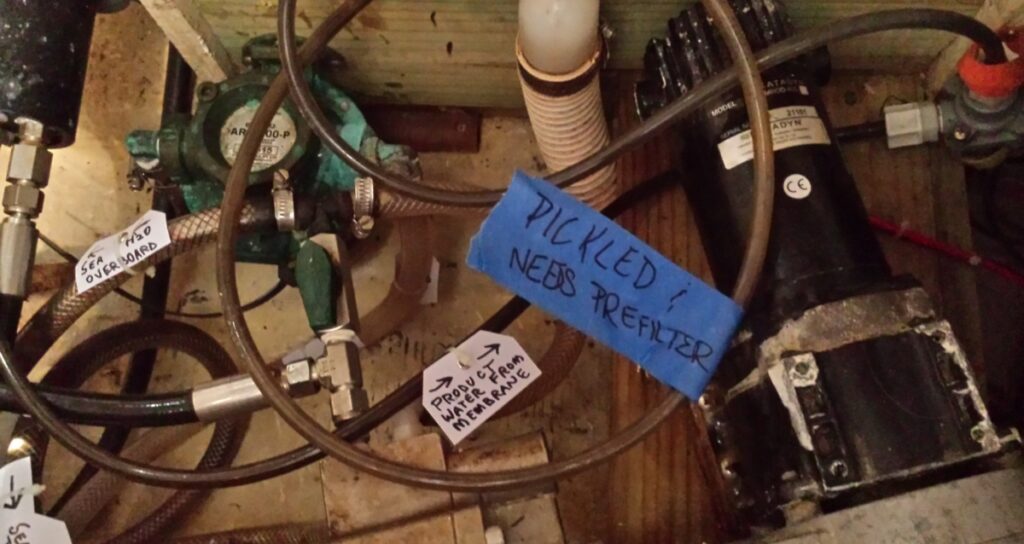
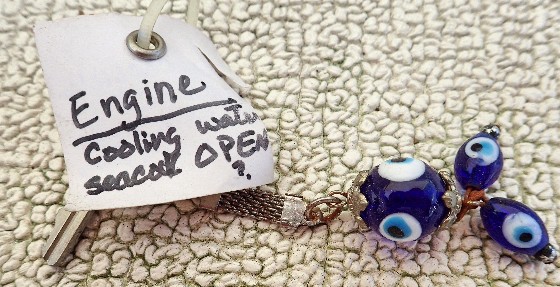
Our tags were nothing fancy. Most were pieces of blue tape with a note written with a Sharpie. Breaker switches that shouldn’t be turned on without a particular action taken had a piece of tape placed right over them. The watermaker output hose (the first step for us in making water is putting it in a jar for testing) was tagged with a reminder about the pickling, and that the prefilter needed to be replaced. The engine key was tagged with a reminder to open the seacock.
Signs of a Good Reminder System
I like to keep things simple. But you can’t talk to as many cruisers as I have without discovering a wide range of reminders. The best way to remember how you left the boat is with a system that meets the following guidelines:
- Easy to use. If you adopt a cool app that you struggle to make work, you won’t make those important reminders, will you?
- Noticeable when you need it. If your engine-starting checklist is stored in your navigation station, it won’t help you remember to switch your batteries to the starter bank or open the raw water seacock.
- Works for everyone. Scrawled notes or labels that only the writer can read are not good labels. Perhaps you want to assign labeling duties to the crew member with the best handwriting.
- Feels natural for you. Some people live on their devices. Any information not on their phone gets missed. Others like to keep things analog. Know yourself, and choose what works for your boat, not anyone else’s.
- Survives long enough for the information to be accessible. Thermal printed labels fade. Water-based markers on paper smudge over time. Heavy cardstock, tape, and permanent markers ensure you’ll still have the information after leaving the boat behind for some time. You can also buy waterproof, writeable tags on Amazon.
Other Reminder Systems
As I said above, I like simple labels that are just where we need them. But if that system doesn’t work for you, here are a few other ideas to consider.
Photos with markup
Take a photo and add arrows and text with markup. This feature is built-in for iPhones. If you use an Android phone, you’ll need to download a standalone app.
The obvious downside is that your reminder is not right on the item on your boat. But there are a few benefits as well:
- The ability to save photos in the cloud so you can access them anywhere (helpful if you’re buying parts before returning to the boat to work on a project)
- You can link the image to your calendar so you get notifications. Some people rely so heavily on alerts that any system that doesn’t use them feels awkward.
Keep in mind, most boat owners will use a hybrid system of reminders, just as we did. You might find this a helpful addition to labeling some vital parts.
Checklists
Any field that requires operators to follow procedures under stress (piloting a plane or performing surgery, for example) relies on checklists.
Guests will find a checklist for using a marine head helpful. An engine-starting checklist can help you avoid a careless (and costly) mistake. Make it easy by putting a dry-erase marker next to a laminated checklist.
A bonus to checklists is that they’re a great way to involve kids on board. It’s an important job to make sure the list is followed. It also teaches them the steps so they’re ingrained when you decide they’re ready to take the helm.
Proximity
Finally, just like with labels, keeping reminders near the system needing attention is a smart idea. Cruiser Jude hangs his engine key on the handle to the engine seacock. He can’t start the engine without touching the seacock.
Note: Be careful. Depending on the location of your seacock, you could find yourself nudging the keys the wrong way and losing them in the bowels of the engine compartment.
Anyone Can Forget
In the chaos of returning to your boat, it’s easy to become distracted, even when you’ve been living aboard for years. It’s even more likely when you have guests with you.
This past July fourth, nine people were injured in a boat explosion in the Chesapeake and Delaware Canal in the eastern United States. What happened? It’s believed the owner forgot to use the blower fan to exhaust the gas fumes before starting the engine (fortunately, something we don’t have to worry about with diesel engines).
It’s a tragic reminder that anyone can have a slip of their memory. Don’t assume you will remember everything when you return to the boat after an absence. Create reminders for yourself that will help you avoid problems.
Each week, I share helpful tips for boat owners in The Boat Galley newsletter. You’ll find short, actionable ideas that you don’t get from sailing certifications—the kinds of things you learn from fellow cruisers. Don’t miss out. Subscribe to The Boat Galley newsletter today.

Carolyn Shearlock has lived aboard full-time for 17 years, splitting her time between a Tayana 37 monohull and a Gemini 105 catamaran. She’s cruised over 14,000 miles, from Pacific Mexico and Central America to Florida and the Bahamas, gaining firsthand experience with the joys and challenges of life on the water.
Through The Boat Galley, Carolyn has helped thousands of people explore, prepare for, and enjoy life afloat. She shares her expertise as an instructor at Cruisers University, in leading boating publications, and through her bestselling book, The Boat Galley Cookbook. She is passionate about helping others embark on their liveaboard journey—making life on the water simpler, safer, and more enjoyable.
Leave a Reply