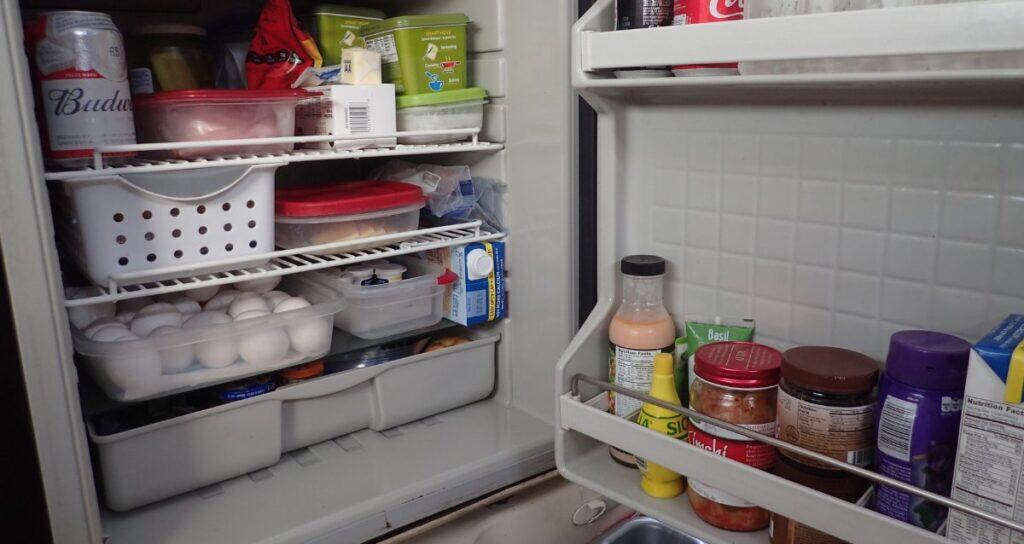
If you’re installing a boat refrigerator for the first time or doing a major upgrade on your existing system, you may be overwhelmed. You have to make several decisions simultaneously. Like many things in cruising, from your choice of boat to the route you take, there are no universal answers in choosing a boat refrigerator system. But understanding how one decision will impact others can narrow down the range of appropriate choices for your situation.
A good framework is to consider the four parts of a boat refrigerator.
Four Parts to a Boat Refrigerator
Adding or upgrading a boat refrigerator isn’t like going out to an appliance store, buying the one you like, and having it delivered. On a boat, you need to consider:
- Power and how you’ll supply it
- Where you’ll install the compressor
- The box’s size, location, and construction all must be considered
- What brand?
They all have to work together to make having refrigeration pleasant, as opposed to a frustration.
(UPDATE: Since I originally wrote this article, we purchased an Engel refrigerator/freezer (Amazon) to use as a stand-alone freezer. We loved it. Learn more about the Engel refrigerator/freezer and why we chose one for our boat.
Power
For most cruisers, the first considerations when choosing refrigeration are:
- How much power will it use? and
- How can I provide the power?
Your other choices will determine how much power the refrigerator uses, and even how you choose to power it.
Engine-Driven Refrigeration
On many boats, the refrigerator is next to the engine compartment (a serious design flaw). Running the engine to provide power, whether via alternator to the batteries or directly for an engine-driven system, will heat up the box and require more power to cool it down. The same is true if the refrigerator is next to a generator compartment.
Relatively few boats opt for engine-driven refrigeration anymore. With an engine-driven system, you run the engine a couple of times a day, generally for 30 to 60 minutes at a time. That cools down large chill plates that then keep the box cool until the next run time. There are several disadvantages to this system:
- You’re tied to a schedule for running the engine, even if you’re at the dock, anchored, or sailing along with plenty of wind.
- The temperature in the box fluctuates over the course of the day, particularly in warm climates.
- It’s almost impossible to have a freezer with an engine-driven system.
- If you have a problem with your engine, you’ve just lost your refrigerator as well.
- Fuel cost and engine maintenance add up, not to mention the extra engine hours you’ll rack up.
Read more about the disadvantages of engine-driven refrigeration.
12-Volt Refrigeration
Some large boats opt for 110-volt systems using generators and inverters. I’ve also seen a couple of trawlers that used RV propane systems (as did our Gemini catamaran when we bought it; see why we switched to 12 volt). By far the majority of family cruisers opt for 12-volt systems. A 12-volt system operates off the main battery bank. You can power those batteries via solar, wind, towing generator, alternator, shore power, or generator. Most boats use a combination, and virtually all must increase their power generation capabilities when they install refrigeration, if they haven’t had it before.
Two things to consider with a 12-volt system:
- If you are heading from a relatively cool climate to a hot one (say, going from San Francisco to the Sea of Cortez or Maine to the Caribbean), expect to use a lot more power for your refrigeration than you’re accustomed to. Lots of boats coming to the Sea of Cortez found themselves scurrying to add solar panels or buy a generator as the weather warmed up.
- Make sure your battery bank is sized for the load you’ll be putting on it. Every system has different efficiency (more on this later). It’s likely you’ll need 100 amp-hours or more a day if you’re in a hot climate.
Compressor
More and more boat refrigerators are coming as all-in-one units, but many still have a separate compressor. If you choose one with a separate unit, it’s worth thinking about where to place the compressor.
Yes, you have to find a spot where there is room, and that may seriously limit the choices. But don’t just opt for the first place you find.
In simple terms, most compressors work by transporting heat from the refrigerant to the air around it. It also helps if you keep the fridge and the air around it as cool as possible.
Therefore, putting the compressor in the engine compartment is not good. Nor is putting it in any enclosed location with only small louvers for air circulation. NOTE: A few systems use a keel cooler that transfers heat to the water instead of air cooling. With these, there is little choice in placement.
You also have to consider the distance from the refrigerator box. The refrigerant has to make a full loop from the compressor to the evaporator in the box and back. Bends in the tubing and also a long distance make for more resistance to the circulation of the refrigerant and hence a less efficient system. Be sure to check the specs before buying a compressor to be sure that it will work in your planned location.
And another important consideration is access for maintenance, recharging the system, and other repairs. Okay, so access is never good on a boat. But at least don’t put it where you have to stand on your head or dismount the compressor to check a trouble light or recharge the system.
The Box
Ten years ago, the “box” for most boat refrigerators was custom-made. Now, far more are drop-in units. Either way, you have several choices to make.
Top-loading or front-loading?
If you’re used to a “shore” refrigerator, front-loading just seems so much more natural. And yes, it’s usually easier to see what’s there. But front loaders have a nasty tendency for food to fall out if the boat moves while the door is open. And you need to install clear plastic strips to keep as much cold air in the refrigerator as possible when the door is open. The opening also needs to be either fore or aft facing in a sailboat. If it isn’t, everything will fall out on one tack or the other.
After taking a bit of time to get used to it, I actually preferred my top loader. With a bunch of bins to keep things organized, I could find things quickly. And they stayed in place, no matter what tack we were on or how rough the seas. I was even able to open the refrigerator and make sandwiches while we were riding out a hurricane at anchor and rolling gunwale to gunwale.
On our catamaran, we had a front loader. I had to defrost it frequently because every time I opened the door, warm, moist air rushed in.
Size of a Boat Refrigerator
To some extent, a smaller refrigerator is more efficient. There is simply less space to cool. And yes, having a refrigerator full of cold items as opposed to air is more efficient. But you also need some air space in the refrigerator for that “cool” to circulate. And if things are so tightly packed that you have to remove half of what’s in the refrigerator to get the item you need out, that’s not efficient, either.
A very deep refrigerator can pose problems. One of the top gripes for many women is “standing on my head to get things out of the frig [sic] bottom.” (From Mary, on Facebook.)
And let’s face it, you want a refrigerator that’s large enough to hold what you want it to. And that’s a personal “feeling” — you may want enough meat, drinks, and veggies for a month at a time, or just food for a weekend. I wrote Storing Food Without Refrigeration to help boaters reduce the demand for fridge space. Save the precious cool for the items that need it most.
Location
If you’re just redoing the refrigerator, you’re probably more or less locked in to a location. But if you’re redoing the galley, the top priority should be to keep the refrigerator away from the engine compartment (generator compartment if that’s an issue, too). Second priority would be to keep the refrigerator away from the hull and the sun, which heats it up. The more it’s away from anywhere that the sun will beat down on it (such as next to the companionway), the better.
Insulation
In general, the thicker and higher the R-value, the better. Materials are constantly evolving, so I won’t make specific recommendations. Of course, if you have a limited space, the thickness of insulation is a tradeoff with space inside the refrigerator.
General design
A lid that latches down (instead of just being held by gravity or a magnetic strip) with a thick gasket is best for your boat refrigerator. Far less cold air will seep out. The lid won’t fly across the boat in a knockdown, either!
An outside surface (surround) that reflects heat will also do wonders to help your refrigerator run more efficiently. Que Tal had a teak surround that frequently got warm to the touch in summer. You know that’s not good.
If you decide to put a drain in the bottom for when you defrost, it needs to have a trap in it. The trap also needs to be within the insulated area. An alternative is to be able to securely close the drain. Otherwise, hot air from the bilge (well, maybe not hot, but hotter than what’s in the refrigerator) will rise into the refrigerator, and you’ll constantly be having to cool it.
Freezer
There are all sorts of design possibilities for having either a separate freezer or a freezer compartment within the refrigerator. The size of the freezer determines how much meat you can carry, as well as how many meals you can prepare ahead for a passage. But it takes a lot of energy to freeze foods in the first place. It takes far less to keep a full freezer frozen.
My freezer was about ½ cubic foot, and I found it adequate (I boned all meat before freezing so as not to waste space on non-edible items). But I would have loved a larger one. If you want to have ice, remember to allow room for trays (be sure to get the vertical ones) in addition to food. Note that very few boat freezers are cold enough to keep ice cream.
I eventually got an Engle Portable unit as a dedicated freezer and loved it. It froze ice cream, even on the hottest days.
The Brand of Your Boat Refrigerator
The longer we cruised, the more adamant we became about buying brands – and models within brands – that lots of other cruisers were using or that were composed of generic parts. Regardless of whether it was refrigeration or another system, we found over and over again that having something that other people – both helpful cruisers and local repairmen – knew of and could get parts for was worth not necessarily having the “latest and greatest.”
Good repair manuals that you can actually get, off-the-shelf parts, and universal fittings are crucial once you’re away from the original installer. I also like companies that will respond to technical support questions by e-mail. You don’t want to deal with support issues by satellite phone. The time to think about these issues is before you plunk your money down.
Conclusion
As you work through these questions, you’ll almost certainly have to make some compromises to end up with a boat refrigerator system that works for you. The trick is to realize the tradeoffs as you’re making them, and not after the fact when things aren’t working the way you envisioned. For example, a tiny box with thick insulation won’t use much power – but will it give you the food and drinks you want?
A refrigerator is an expensive piece of galley equipment – even more so if you have to add extra batteries and upgrade your power generation. As brands and models are always changing, I don’t want to recommend specific systems. But as you talk to sales reps, realize that there are numerous components to the refrigeration system, and choices in each affect the others and your ultimate satisfaction!

Carolyn Shearlock has lived aboard full-time for 17 years, splitting her time between a Tayana 37 monohull and a Gemini 105 catamaran. She’s cruised over 14,000 miles, from Pacific Mexico and Central America to Florida and the Bahamas, gaining firsthand experience with the joys and challenges of life on the water.
Through The Boat Galley, Carolyn has helped thousands of people explore, prepare for, and enjoy life afloat. She shares her expertise as an instructor at Cruisers University, in leading boating publications, and through her bestselling book, The Boat Galley Cookbook. She is passionate about helping others embark on their liveaboard journey—making life on the water simpler, safer, and more enjoyable.
Leave a Reply