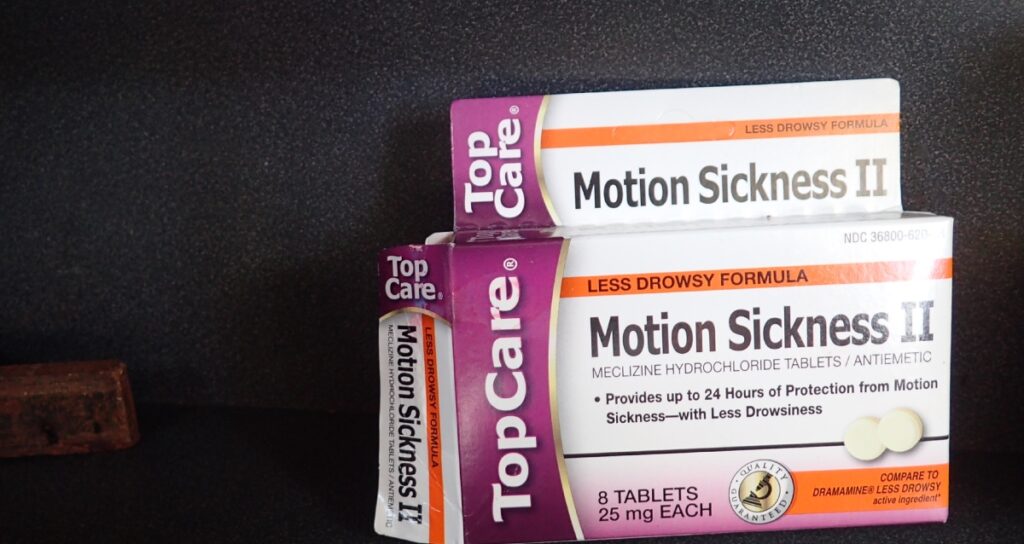
Being seasick is awful.
There’s really no polite way to say it. It’s miserable, draining, and can turn an enjoyable day on the water into something you want to be over. And unfortunately, seasickness has a nasty habit of sneaking up on people—sometimes even those who don’t usually get sick.
What makes it worse is not being ready for it. The key is to prepare for seasickness by having medication close at hand and knowing the most effective remedy for you.
Where to Keep Seasickness Medication
Rooting through lockers and bins looking for seasickness remedies only adds to the misery. Trust me on this. By the time you’re feeling queasy, the last thing you want to do is go below, open drawers, or hunt for a half-remembered stash of pills. In fact, spending time below and concentrating on the fine print on a box of medicine can make you feel worse.
Even if you think you’ll never get seasick, it’s wise to keep something within easy reach from the cockpit. If you go below, the motion feels stronger, the air is often warmer, and your visual reference disappears. Trying to read labels, sort through bags, or focus on directions doesn’t help either.
On our boat, we kept seasickness remedies right inside the door to the cockpit. I can reach in and grab them instantly. They’re in plain sight and always in the same place. That one small decision has made a big difference.
Having them there does more than just save time. It reminds me to take something before we head out. If we’re planning a longer passage or expect conditions that might bother me, I start taking medication 12 to 24 hours ahead of time. That early start often makes the difference between feeling fine and feeling miserable.
And if I forget—or if I don’t think I’ll need anything and then discover that I do—I don’t make the seasickness worse by going inside or digging through lockers. I just reach in, grab what I need, and stay where I feel best.
What’s the Best Medicine for You
The specific remedy isn’t the important part here. What works well for me might not help you. Some people do better with other medications, acupressure wristbands, a single ear plug, ginger, or non-drug approaches altogether. The key isn’t what you use—it’s that you know what works for you and that it’s immediately accessible.
If you’re experimenting to find what helps, keep notes. Everyone’s body reacts differently, and what works on one trip may not work as well on another. Over time, most people develop a personal “system” that minimizes symptoms and lets them function normally.
It’s also important that you take medication before you think you’ll need it. If you’re already feeling nauseous, you may lose the medication before it has time to work. Related to this is an important tip for women who take birth control pills. Vomiting from seasickness may leave you unprotected. If the pill doesn’t stay down, it may not be absorbed. It’s worth talking with your doctor ahead of time about what to do in this situation and whether you should carry alternative birth control as a backup.
Seasickness is one of those topics people don’t always like to talk about, but it’s part of real life on a boat. A little planning, thoughtful storage, and honest self-awareness can make a huge difference. You may not be able to prevent seasickness entirely, but you can make it far less disruptive—and recover much faster when it does strike.
Learn More
Managing seasickness is just one of many small changes that can make life aboard more comfortable. Our online course, The Basics of Living on a Boat, shows practical ways to improve day-to-day life aboard, from comfort and routines to systems and habits that make boating easier and more enjoyable overall.
You Might Also Be Wondering About . . .

Carolyn Shearlock has lived aboard full-time for 17 years, splitting her time between a Tayana 37 monohull and a Gemini 105 catamaran. She’s cruised over 14,000 miles, from Pacific Mexico and Central America to Florida and the Bahamas, gaining firsthand experience with the joys and challenges of life on the water.
Through The Boat Galley, Carolyn has helped thousands of people explore, prepare for, and enjoy life afloat. She shares her expertise as an instructor at Cruisers University, in leading boating publications, and through her bestselling book, The Boat Galley Cookbook. She is passionate about helping others embark on their liveaboard journey—making life on the water simpler, safer, and more enjoyable.
Diane Ericsson says
We have a very small plastic drinking glass (child sized) that fits in the galley spice rack. It always has a couple of blister packed seasick med tablets and a few Emergen-C packets. Just knowing it is there helps!
Gina Soucheray says
We have a small “comfort bag” in the head with meclizine, accupressure bands, ear plugs, a couple of sleeping eye masks, inexpensive sunglasses and Breathe Right strips. A little something for everyone – guests and crew alike. In other news, I have a load of yogurt underway right now. Thanks for all the good hints. Gina on B’s Hive
Admiral says
Do you still get seasick? I thought that after a certain amount of time (different for every person), they wouldn’t get seasick any more 🙁
Carolyn Shearlock says
I never used to, now I do occasionally. If the motion is right, I’ll get hit.
Chad Yarborough says
I got scopolamine this year. My wife liked them fine. I go for Less Drowsy Dramamine when I start to turn green. Any recommends?
Mary Nichol says
As a life time sufferer of motion sickness ( I was a blast in the car as a child!), every morning we take our boat out, myself AND our dog take our meclizine.
Tony Gariepy says
It would be bad to fill the bilge while rooting around for your meds…
Eric Ludin says
Good point about women taking birth control pills……but, my wife is not usually that amorous when she is seasick!
Carolyn Shearlock says
But puking them up for a couple days can have longer effects . . .
Angie White says
In my belly.
Diane Ericsson says
We keep them in the spice rack in the galley and it is reachable from the cockpit. An assortment of meds & herbal types all fit in one kid size plastic juice glass.
Amanda says
I keep some by my bed as I literally need them before I get up. I keep more in the cockpit table and yet more in the first aid box and finally, more in a plastic container in the fridge! Yes, I really suffer with it! LOL
Ellie says
We keep ours within reach of companion way hatch. I always start 24 hours before we leave too..and just to make sure I don’t forget them on the moring we leave I wrap the engine keys around a blister pack of them.. I always keep some dry snacks and Gatorade in the cockpit too because if it’s rough there is no way I’m going below unless it’s to check to engine or use the head. Being on the helm seems to really help the seasicknes for me too. You always have such articles that are so helped to us all, Your blog makes us feel like we have our own personal boat reference guru 💞 I’ve learned more from your post then all the other boat bloggers combined.
Carolyn Shearlock says
Well, thank you! Glad you find it so helpful!