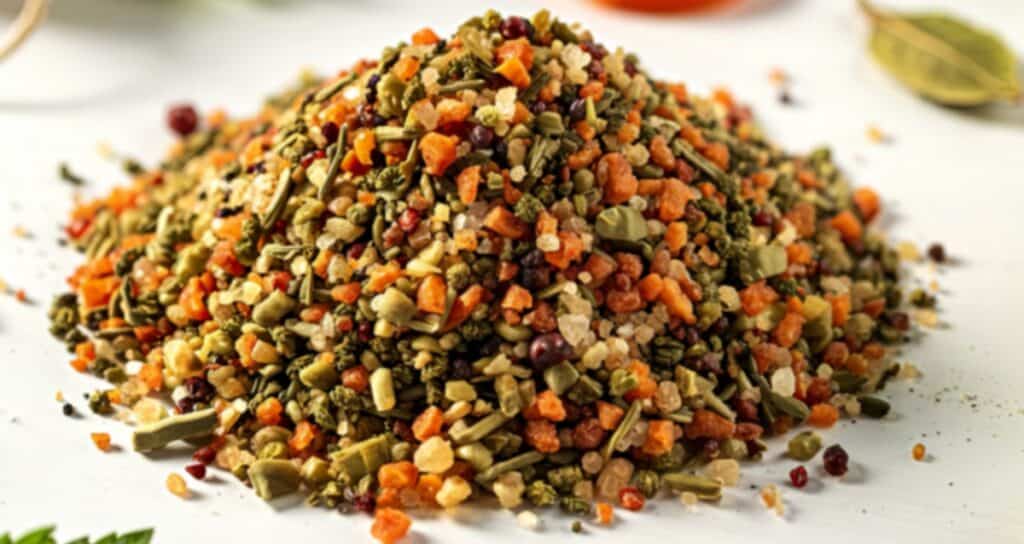
I’ve never been particularly excited about dehydrated food. Years ago, Dave and I ate a fair amount of dehydrated “backpacking meals” (prepackaged meals where you just add boiling water) on canoe trips and backpacking adventures. Later, while cruising in the Sea of Cortez and Central America, I carried a few packages of backpacking meals as emergency food.
But for most of our camping and cruising, we ate fresh and canned food.
Until we went to the Bahamas.
During that trip, we used a lot of dehydrated food—but instead of buying the “meal in a pouch” type, I stocked up on jars of individual dehydrated ingredients. After using them for four months aboard, here’s what I learned.
Why Use Dehydrated Food on a Boat
The Bahamas—especially in summer, when there are few cruisers and many locals are on vacation—can be a tough place to provision. You won’t starve, but fresh produce can be scarce, and what you do find is expensive (often roughly twice the cost of similar items in the Florida Keys, which are already pricey compared to much of the U.S.).
Barefoot Gal has a small refrigerator and a tiny freezer, and as a catamaran, she’s weight-sensitive. At just 34 feet, storage space is also at a premium. Because dehydrated food is significantly lighter and more compact than canned food, it seemed like a good choice.
Using extra water to rehydrate food wasn’t a concern for us, since we have a watermaker.
What I Bought
I decided to go with Harmony House foods, primarily because they package their products in plastic jars rather than cans. The square-ish jars make efficient use of space, have screw-top lids that are easy to use, and stayed closed underway. (If we were doing longer or rougher passages, I’d tape the lids shut so they couldn’t accidentally unscrew.)
Harmony House generally gets good reviews, but I quickly learned to read those reviews carefully. A lot of dehydrated food is bought by preppers and put straight into long-term storage. Reviews often focus on cost per serving or per 1,000 calories, shipping speed, and packaging—not taste or texture.
I remembered Harmony House meals tasting good when we backpacked years ago. Several friends also spoke very highly of Thrive Foods, but many of Thrive’s products were backordered when I was provisioning for the Bahamas.
I bought one of Harmony House’s “Pantry Stuffer” sample packs of vegetables, plus a few extra items not included in the pack and several soup mixes. I did not buy their meat substitutes, fruits, or beans—although a friend later gave me a jar of their dehydrated garbanzo beans.
For meat, I chose Legacy Essentials, which freeze-dries rather than dehydrates their products. I picked them mainly because their meats were packaged in space-saving pouches instead of large cans. I bought a chicken and beef package with three pouches of each—a total of 114 servings.
I also brought a wide variety of dried fruits—raisins, dates, cranberries, blueberries, and apples—from the local grocery store, where prices were better and selection was good. I also stocked up on dried beans.
My Reaction to Using Dehydrated Food
The dehydrated vegetables and meats are generally diced into ¼-inch cubes (mushrooms are available larger, and peas are left whole). This works well for onions, leeks, mushrooms, red and green peppers, and tomatoes. It’s less ideal for foods like potatoes, carrots, squash, and broccoli, which you might expect to be in larger chunks. The same was true for the meat.
Vegetables can either be rehydrated as they cook (it takes about 20 minutes for full rehydration) or soaked for several hours ahead of time. Meat can be added directly to cooked dishes or soaked briefly for a couple of minutes.
If you’re using a significant amount of dehydrated food in a recipe, you’ll need to add extra water—the exact amount varies depending on the food.
Taste and Meal Results
All the dishes made primarily from dehydrated food tasted fine—but they tended to resemble one another, with a somewhat “stew-y” texture, just with different flavors. I quickly learned that dehydrated foods work best in soups, stews, casseroles, and similar dishes.
The meat worked well in tacos, but tasted best when I had fresh tomatoes to add instead of rehydrated ones. Spanish rice, goulash, gumbo, and jambalaya were also good choices. You cannot sauté or brown dehydrated foods.
None of the foods include spices, and I found I needed to add a bit more seasoning than I would when cooking with canned food. The meat is very lean, and adding a small amount of cooking oil—about a teaspoon—made a noticeable improvement in flavor.
What Dehydrated Foods Worked Well
- Tomato powder is an excellent substitute for tomato sauce or paste. I made good spaghetti sauce and more with it. It does absorb moisture easily and can harden in the jar, but breaking it up isn’t difficult. Keeping a few dried beans in the jar helps.
- Celery adds good flavor, though not crunch.
- Jalapeños are great for adding heat. A little goes a long way—six ounces is a lot.
- Green beans were outstanding. Despite being cut short, they were the one vegetable we regularly ate on their own, and we also used them in salads.
- Zucchini, sweet potatoes, and butternut squash all worked well in zucchini bread. I often made this the day before an early departure so we’d have something easy for breakfast or snacks underway.
- Soup mixes were excellent for quick meals, especially with homemade bread. I cooked them with water, bouillon, extra spices, and added meat just before serving.
Using Dehydrated and Freeze-Dried Meats
I preferred the beef to the chicken. The chicken was fragile, and about a third of each bag had broken down into powder. I tried to use a mix of powder and chunks each time so I wouldn’t end up with only powder at the end of the bag.
As with canned meat, freeze-dried meat should be added at the very end of cooking and stirred gently to minimize further breakage.
We also found the stated portion size—½ cup of dehydrated meat per person—to be too much. I typically used ¼ to ⅓ cup per person.
Other Items
The dried fruits were nothing new for us, and I used them in muffins, oatmeal, desserts, salads, and more. Fresh fruit was scarce in the Bahamas, and these made meals both healthier and more enjoyable.
The dried beans (kidney, navy, black, etc.) worked well—as long as I remembered to soak them and start them early. Without canned beans as backup, I occasionally got caught short. The dehydrated garbanzo beans I was given, however, were excellent and ready in about 20 minutes; I usually turned them into hummus.
For the Future
Most of what I bought we liked and would use again. I’ll definitely take more soup and chili mixes next time—I only had three single-meal packages.
The carrots, potatoes, and meats were disappointments. I’ll use up what I have but won’t buy more. Since carrots and potatoes store well fresh, I’ll stock up when possible and do without otherwise.
For meat, I plan to rely more on canned options and may try Thrive’s ground beef, chicken slices, sausage crumbles, and possibly their pulled pork.
In addition to regular dried beans (which are cheaper), I’ll keep a small supply of Harmony House beans that are ready in 20 minutes.
Bottom Line
Using dehydrated food saved a significant amount of weight and space compared to canned food and allowed us to eat balanced meals no matter where we were. For the number of meals we got, the cost was reasonable—especially compared to grocery prices in the Bahamas.
The square jars were easy to stow without wasted space. I don’t know whether chicken would break up less if packed in cans; my suspicion is that it would break up over time regardless.
Overall, I wouldn’t use dehydrated foods where fresh food is readily available at reasonable prices—fresh simply tastes better and has better texture. But where fresh food is scarce or expensive, and canned food is too heavy or bulky, dehydrated food is a viable and useful option.
Sources
In addition to buying directly from the companies (links above), you can also buy Harmony House and Legacy Essentials on Amazon:
- Legacy Essentials on Amazon (they have many dehydrated/freeze-dried products besides meat)
- Harmony House products on Amazon
Learn More
Are you looking at dehydrated food because you don’t have a refrigerator? If so, my book Storing Food Without Refrigeration focuses on practical, real-world ways to keep food safe and usable aboard and give you lots of meal ideas. It covers meats, produce, dairy, condiments, and everything else you need for delicious meals!
Or maybe you do have a refrigerator, but it’s small and just can’t hold everything you’d like. In that case, our online course Eating Well With a Tiny Fridge shows how to store much of your food outside the refrigerator (it includes a copy of Storing Food Without Refrigeration) and how to make the most of the refrigerator space you do have.
And if dehydrated food is just one piece of a bigger “how do I even start provisioning for boat life?” question, Provisioning, Meal Planning, and Food Storage walks through the whole process step by step so you can stock your boat with confidence.

Carolyn Shearlock has lived aboard full-time for 17 years, splitting her time between a Tayana 37 monohull and a Gemini 105 catamaran. She’s cruised over 14,000 miles, from Pacific Mexico and Central America to Florida and the Bahamas, gaining firsthand experience with the joys and challenges of life on the water.
Through The Boat Galley, Carolyn has helped thousands of people explore, prepare for, and enjoy life afloat. She shares her expertise as an instructor at Cruisers University, in leading boating publications, and through her bestselling book, The Boat Galley Cookbook. She is passionate about helping others embark on their liveaboard journey—making life on the water simpler, safer, and more enjoyable.
Tony Gariepy says
Food for thought, although a bit dry…
Susan Werner says
So is your sense of humor😉
Janice Sterling says
After reading your article, I clicked on a link to Amazon and found all kinds of dried foods. Including the picture below. Also dried tarantulas, scorpions and earthworm jerky. YUM LOL
The Boat Galley says
Oh my. No, not what we were eating . . .
Rose Mari Sephton says
I like Thrive, especially the mashed potatoes, honey crystals and sour cream. We are experimenting g with freeze dried food to see what we like best. Thanks for the article/s I love receiving them. Please continue to educate us. We have our countdown calendar on the wall, it won’t be long now!!
The Boat Galley says
I might have to try their mashed potatoes. Nice to know that they are ONLY potatoes, so I can make them with soy milk (Dave is allergic to cow’s milk and anything made from it . . .)
Rose Mari Sephton says
I just used water and it tasted fantastic! The shipping in Canada is very high so I am looking into Legacy for meals to go and also individual items. Free shipping over $200.
liz says
I always use the dried whole egg powder for baking- it works fine. Also, I think my favourite dehydrated veg is sliced mushrooms. Tastes just like the real thing. I’ve had broccoli, which was just like fresh, but crumbled and took up way too much space. (We are on a cat too). I had no luck at all with my powdered tomato – great idea but all I ended up with was a big red rock :-). Some things, like instant mash, hash browns, etc. you can get at Costco and supermarkets and I find they are just as good and easier to access.
Carolyn Shearlock says
Yep! I keep some Ova-Easy eggs on hand for times I don’t have any (they’re enough more expensive I don’t use them if I do have plenty of regular). And yes, I do get potato flakes and such at the grocery.
Stacey says
While you are back in Florida and in a marina try buying a dehydrator (they are cheap at Walmart) and make some stuff yourself. I do this a TON st home and it’s SOOOOOO easy! As for carrots, if you peel the skin off then use the peeler to work down the carrot slicing very thin circles off, you can dehydrate a 5lb bag quickly and easily. Once dropped in water they rehydrate in minutes, and maintain their shape and crunch. Win! I do about 10lbs of carrots this way at home. Corn works well, as do frozen bags of corn/carrot/peas/Gbean mix. Try doing your own and you will be astounded with the results. Also, dehydrated and grated butternut squash makes a fantastic base for creamy type soups.
Christine Dumaine Springfield says
I just made clams with angel hair pasta using their mushrooms and shallots. A little bacon, white wine, butter and a can of clams made an amazing dinner.
Christine Dumaine Springfield says
I was less than thrilled with the sour cream and other milk powders. I did and still do use the heck out of the dried veggies. The fruits didn’t last that long because they were very good straight out of the jar. Good snack! I did make a blueberry/pineapple compote to go with a coconut pound cake I made. I rehydrated with apple juice. Also very good. I’d buy the Harmony fruits and veggies again in a heartbeat.
Ali says
Tyson do chicken in the grocery in foil packets which taste pretty good an save weight. Also you can find salmon fillets in foil instead of cans. You can get long life corn on the cob in Walmart which is a nice change. Dehydrated foods, nuts.com do some good corn and peas. Harmony House dried leeks and shallots are good for adding flavor to a dish and we often do the knorr pasta packets and throw in a handful of their dried garbanzos, all ready at the same time. We have crossed Atlantic five times in 35 foot sailboat and have never needed to tape down any lids. Even the wine bottles survive.
Carolyn Shearlock says
Thanks for the info — I’ve had things come unscrewed just with “normal” motion of the boat, but it may depend somewhat on where/how things are stowed.
Ali says
One thing to avoid, I bought the five pounds of dehydrated fruits and divided using a seal a meal, do not do this, you end up with a solid sticky blob. Tastes like fruit but takes hours or a saw to chop off a chunk.
Dave Skolnick says
I’m going to add a contrary thought. Dehydrated foods obviously need water to rehydrate. For many cruisers water is a very valuable commodity. Yes, Carolyn and Dave have a watermaker but not everyone does. Even with a watermaker we are only one mechanical failure away from rationing. That can be anything from an inconvenience to a critical situation depending on where you are and what alternatives you may have.
Canned goods and most fresh food is a net contributor of liquid in our diets.
SV Rhapsody says
I’ve been looking into dehydrated foods for cruising. But like Dave was talking about, no watermaker. So it’s one of those things that a cruiser would need to plan ahead of time. From what I’ve seen/read, water supply can sometimes be limited.
Carolyn Shearlock says
Yes, the water supply is definitely one thing to consider. And since I don’t want to food-less if the watermaker goes out, I do have some canned food as well. That said, I never used more than a quart of water a day to rehydrate food for two people (but note that I was using a combination of fresh, canned and dehydrated).
Melissa White says
This is timely as I’ve been considering getting some dried berries to have on board. Mexico has a lot of cheap and good food available, probably better than the Bahamas, but berries like raspberries and blueberries would be good to have dried.
Carolyn Shearlock says
Oh provisioning in Mexico is ten — maybe 20 — times easier than in the Bahamas (and we cruised Pacific Mexico/Sea of Cortez 8 to 12 years ago — it’s even better now)! Always good to have some long-lived stocks on board, but you’ll be able to get a lot of commercial dried fruits in the groceries in mid-sized cities and larger. In the smaller towns, you’ll find home-dried stuff at the farmer’s markets.
LaMarr says
I’m just starting to to use some back packing dehydrated foods in my van. The freeze dried foods need to have oxygen absorbers or be resealed quickly with vacumm packing. I use mason jars, with the “Food Saver” bottle sealer. I slip all the odd socks over the bottles so they don’t rattle.
Tomatoe powder, powdered butter, onion and garlic go clumpy with humidity so I repack them in Pints. I even revacumm them.
Where I have the microwave in my van, I find it faster to just put the water in the freezer bag, or cup in the cozy, and heat the reconstituting liquid in the microwave, rather than boil the water, The teapots and other water heating methods aren’t any faster or more convienient.
Backpacking stews, chilli, pasta dishes, all tasted fine, Bacon and eggs can get broken up and just have freezed dried powder that doesn’t have a good texture broken up. Instant Rice, and freeze dried beef with freeze dried veggies work well as do cheese sauce and broccoli.
Just some of my observations, but I’m learning.
Off topic wishing you the best coming through “Mathew”
liz says
I have had absolutely no luck with the tomato powder (purchased from Emergency Essentials). They were kind enough to send me a free tin when I pointed it out to them but it was solid before I even opened it. So I am interested to read that you are having good luck. It is a product I would think would be very useful (if it worked). I tried butter about 8 years ago but couldn’t get it to fry at all
Tami says
I find I never have to soak beans ’cause I cook in a pressure cooker
You can find some good dried onions, mushrooms etc in Asian markets and the prices are low
Rick Garvin says
We really like the dried shallots and freeze dried mushrooms from northbaytrading.com. The green beans, peas, chopped red pepper are good too. We did not care for the carrots, celery, or broccoli as the consistency was not great and the flavor seemed muted. The spinach was quite bitter and metallic.
For us, the dried shallots are cheaper than fresh and great for cooking. The freeze dried mushrooms are as good as fresh for cooking, but more expensive. The rest we’ll save for emergencies or extreme circumstances.
Cheers, RickG
Carla Barrett says
Carolyn, my experience with the Harmony House packaging was that the tropical humidity ruined pretty much every one I bought last year. Perhaps the suggestion is to vacumn seal them before stowing- and then vacumn seal after opening.
Carolyn Shearlock says
Interesting — and it certainly couldn’t hurt. I’m still using some that’s 15+ months old and fine (and we’re in high humidity). The only things that are starting to have a problem are the tomato powder (from HH) and some powdered soy sauce and worcestershire sauce, all three of which have become rock hard.