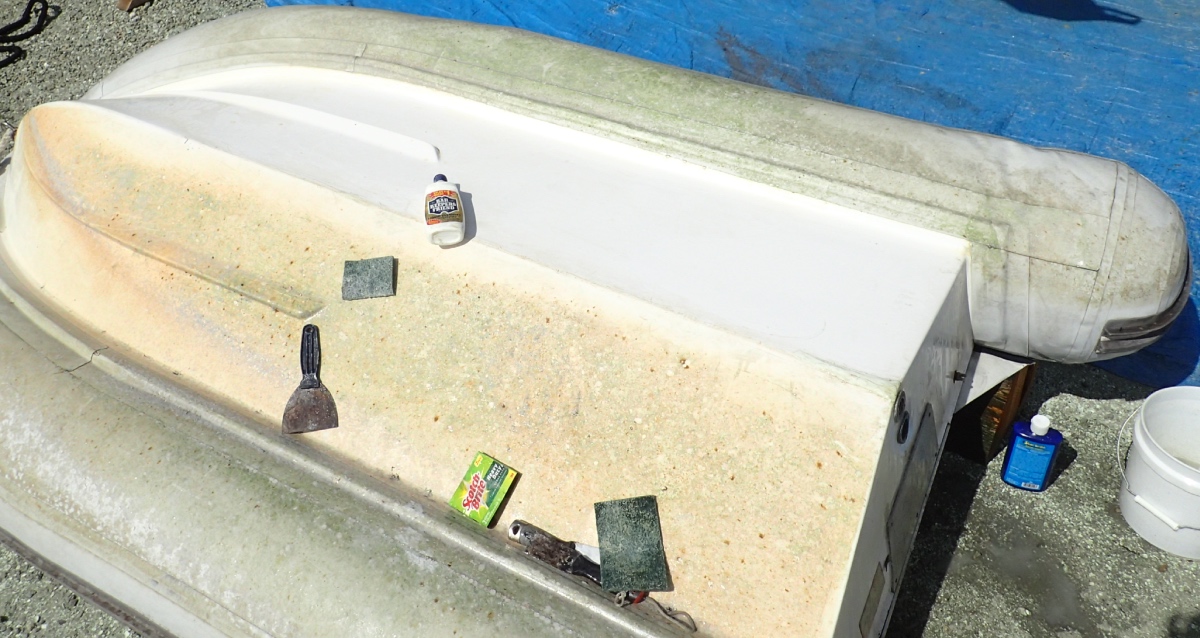
Ugh. Cleaning the dinghy bottom. It was my least favorite chore to accomplish before we relaunched the boat. But luckily, we found a product that’s easily available, less toxic, and best of all, cheap! Keep reading to discover what it is, where to find it, and to get a few DIY tips to make dinghy cleaning less stressful.
Cleaning Your Dinghy Bottom is a Nuisance (But Important)
Even though we had dinghy davits and pulled the dinghy out of the water every night to prevent barnacles, there was still a certain amount of growth on the bottom. On our previous boat, without davits, we hoisted it every night using our whisker pole. And it helped. But we still had quite a bit of growth.
Why is that a problem? If you don’t clean your dinghy bottom regularly, the motor (or rower!) has to work harder and harder to move the dinghy at all. Speed suffers and fuel consumption increases.
What We Did Wrong
The first time we cleaned a dinghy on our first cruising boat (after not having hoisted it and with a nice crop of barnacles), we didn’t know any better and cleaned it on the deck of the boat. Talk about a big mess!
You have to take the dinghy ashore, remove the motor, flip the dinghy over, and clean it. It was fun. Not really.
Two things we learned from that: pull the dinghy out of the water at night, both for security and to significantly slow the barnacle growth, and don’t clean the dinghy on the foredeck.
Still, we’d never really hit upon a good way to clean the dinghy bottom. Admittedly, it was easier while the boat was in the yard, hence why we wanted to do it before relaunching.
A Better Method for Cleaning a Dinghy Bottom
We kept looking for a way to make this odious chore more pleasant. Eventually, we hit upon the technique of using a green scrubby over a putty knife, and that helped some.
Then, Dave’s brother sent him a newspaper article claiming that WD-40 could help clean boat bottoms. So we tried it. To be honest, we didn’t find it to be a breakthrough. A reader had suggested Krud Kutter, but that didn’t do much for us either.
But it got us thinking about what might make it easier.
Cleaning Your Dinghy with Bar Keeper’s Friend (BKF)
I went looking for other things to try and found both a can of powdered Bar Keeper’s Friend (a cleanser with oxalic acid) and an unopened bottle of Liquid Bar Keeper’s Friend that the previous owner had left on the boat.
I did a quick online check to make sure that oxalic acid wouldn’t hurt hypalon or the fiberglass bottom. Everything that I could find said that it was okay with hypalon, fiberglass, and even PVC dinghies.
WOW! The powder Bar Keeper’s Friend (usually abbreviated to BKF) was good, but the liquid was amazing in how fast it cleaned the gunk off.
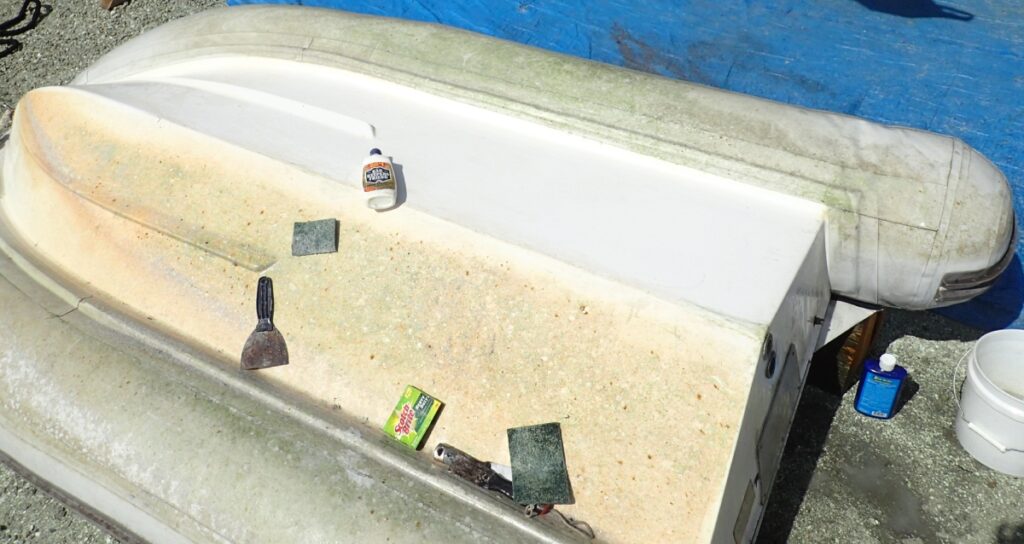
I wet the hull, squirted some Liquid BKF on it, went over it with a green scrubby folded over a putty knife, and it was pretty well clean. I rinsed it off and re-did any stubborn spots, rinsing thoroughly after it was all done. The photo at the top of this article shows the before and after: the side further from the camera is done. Even the little “barnacle footprints” came off completely — and so much more easily!
In less than an hour, we got the whole dinghy bottom and tubes where they were in the water looking almost new — a task that previously took considerably longer. Then we put on two coats of Star-Brite Polish, which helped considerably to keep stuff from growing.
Other Boat Uses
After sharing my discovery with other cruisers, I heard several suggestions. Mark and Cindy of s/v Cream Puff use BKF for rust spots. Don’t leave it on stainless too long before rinsing, however. And although it removes wax or protective coatings from fiberglass, it is good for removing tough marks and stains before waxing.
It also works to clean bare teak.
Susan swears by it to remove mildew in the shower. She appreciates that it doesn’t have the strong smell of most mold and mildew cleaners.
And although it’s not as toxic as many cleaners, oxalic acid is an irritant to some and still needs to be treated with respect. Mike T reminds us not to dispose of it in waterways. Also, don’t mix it with other cleaning products since it reacts with bleach and some alkalis.
Finding Bar Keeper’s Friend
I didn’t find Liquid Bar Keeper’s Friend in any local stores, but I stocked up from Amazon. Other cruisers have found it in hardware stores and home centers. You can even buy it in other countries under different names.
I discovered that they now call it “Soft Cleanser,” but it’s the same formula; a 13-ounce bottle was just enough for our dinghy. Even better — it’s about the cheapest thing we’ve tried other than elbow grease! The Star-Brite is available almost anywhere that sells boat polish, including Amazon.
Looking for More Tips?
The great thing about the cruising community is that we help each by sharing the lessons we’ve learned from our mistakes and victories. It’s why I started The Boat Galley–to lessen the steepness of the learning curve for new cruisers and share helpful tips amongst seasoned boaters. I continue to share helpful information in my weekly newsletter. Subscribe today. Don’t miss out on practical tips, expert insights, and proven strategies to help you tackle life aboard with confidence and simplicity.

Carolyn Shearlock has lived aboard full-time for 17 years, splitting her time between a Tayana 37 monohull and a Gemini 105 catamaran. She’s cruised over 14,000 miles, from Pacific Mexico and Central America to Florida and the Bahamas, gaining firsthand experience with the joys and challenges of life on the water.
Through The Boat Galley, Carolyn has helped thousands of people explore, prepare for, and enjoy life afloat. She shares her expertise as an instructor at Cruisers University, in leading boating publications, and through her bestselling book, The Boat Galley Cookbook. She is passionate about helping others embark on their liveaboard journey—making life on the water simpler, safer, and more enjoyable.
Leave a Reply