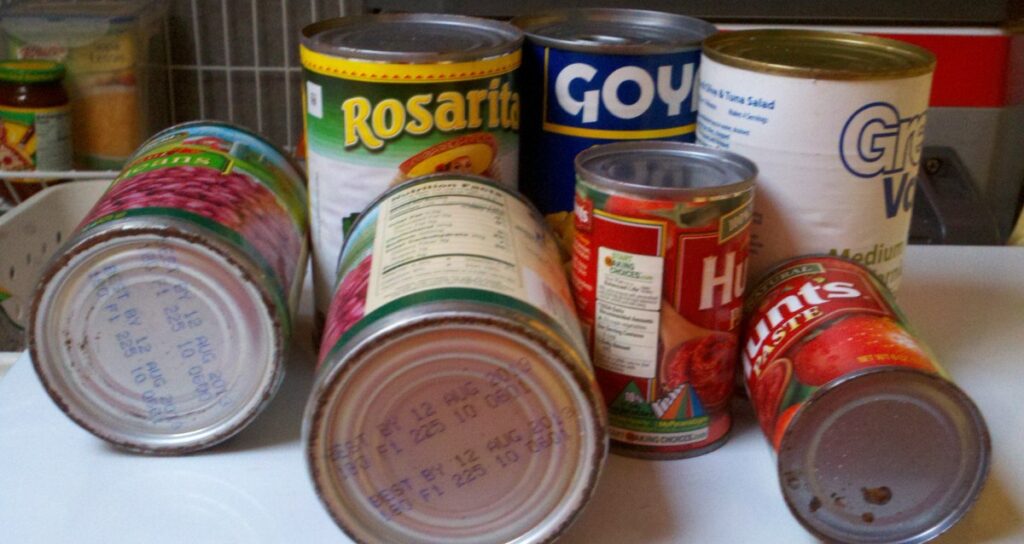
You reach into a locker and pull out a can with rust on the rim. Safe to eat or time to toss it?
Good news: it’s probably fine. But “probably” depends on a quick check, and when you’re days from the nearest store and even farther from a doctor, it’s worth doing it right.
The Two-Second Test
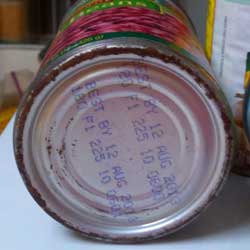
The FDA says surface rust that wipes off with a paper towel is not a problem. The can is safe to use.
Use a paper towel, not your finger. A rusty edge can cut you, and a cut contaminated with rust is a tetanus risk you really don’t want to deal with at anchor.
If the rust doesn’t wipe away cleanly — if you feel pitting or roughness underneath, or you can see spots where the metal has thinned — that’s heavy rust. Toss the can. Heavy rust can create tiny holes that let bacteria in.
What About After You Open It?
Even if the outside looked fine, check the inside before you eat anything.
Any rust on the inside of the can means the food goes overboard. The FDA is clear on this: rust (iron oxide) is not safe to eat, and rust on the inside means the can lining has been compromised. Doesn’t matter how good the contents look or smell.
Also check the ends of the can before you open it. If either end is bulging outward, or the can is leaking, discard it without tasting the contents.
One More Step Before You Open
Wipe the lid before you cut it. Loose rust particles sitting on top of the lid can fall right into the food the moment you open it. A quick wipe with a damp cloth takes two seconds and avoids a mouthful of rust flakes.
Why Cruisers Deal With This More Than Most
After 17 years of living aboard, I’ve pulled plenty of rusty cans out of lockers — including some that had been in there a lot longer than I planned. On a boat, cans live in bilges and lockers where salt air, moisture, and condensation are a constant fact of life. Come back after six months away and you’ll often find a row of rusty rims waiting for you.
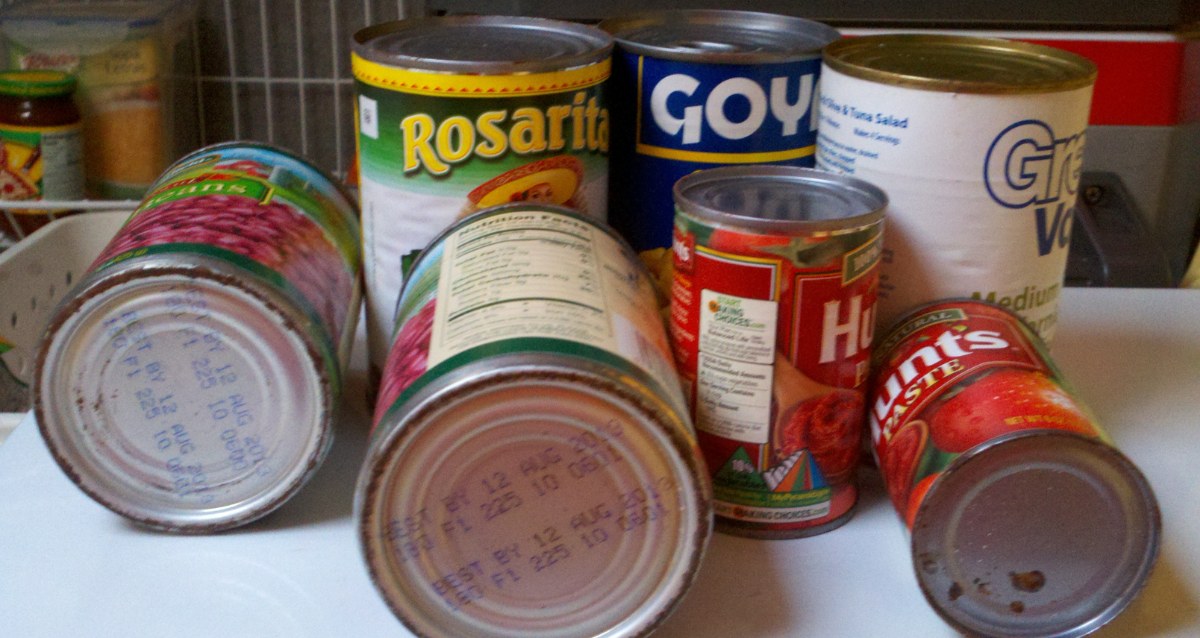
Dave and I had a bunch of them when we got back to Que Tal after one extended trip. We went through each can with a paper towel: wipe it, check it, keep it or toss it. Most were fine.
The stakes are higher when you’re cruising, too. Food poisoning at home is miserable. Food poisoning at anchor two days from the nearest clinic is a genuine emergency. I err on the side of caution. If a can looks questionable, it goes. Canned food is cheap.
Advice From Fellow Cruisers
You can learn a lot from fellow cruisers. Dani reminds us that no matter how good a can looks, it’s a good idea to clean it off before opening it. If mice, rats, or cockroaches climb over them in the grocers, you could be introducing bacteria. It’s probably a good idea to wash your hands after handling them as well.
Ken puts 2-3 cans in a gallon zipper container and squeezes the air out. He finds this helps to inhibit rust on his boat.
Susan K notes that many of the cans they bought did not have dates on them. She wrote the month and year of when she bought cans with a permanent marker. It helped her know which cans to use first.
A Can Safety Quick Checklist
- Rust wipes off with a paper towel? Keep it. Wipe the lid before opening.
- Rust is rough, pitted, or won’t come off? Toss it.
- Either end bulging, or can leaking? Toss it without tasting.
- Rust on the inside after opening? Don’t eat the food.
- Contents look or smell off? Trust your gut and throw it out.
More for Cruisers and Liveaboards
If you found this useful, I send a free newsletter every Wednesday to 22,000 cruisers and liveaboards — covering provisioning, food storage, boat systems, and the real day-to-day of life aboard. Sign up here.

Carolyn Shearlock has lived aboard full-time for 17 years, splitting her time between a Tayana 37 monohull and a Gemini 105 catamaran. She’s cruised over 14,000 miles, from Pacific Mexico and Central America to Florida and the Bahamas, gaining firsthand experience with the joys and challenges of life on the water.
Through The Boat Galley, Carolyn has helped thousands of people explore, prepare for, and enjoy life afloat. She shares her expertise as an instructor at Cruisers University, in leading boating publications, and through her bestselling book, The Boat Galley Cookbook. She is passionate about helping others embark on their liveaboard journey—making life on the water simpler, safer, and more enjoyable.
Carolyn Shearlock says
But grocery stores aren’t always available . . .
Carolyn Shearlock says
Funny but I heard the same thing from a local friend yesterday.
Carolyn Shearlock says
Never heard of something like that before. If you start feeling sick, see a doctor.
The Boat Galley says
And doubly nasty since it was probably the last can you had, so now what are you having for dinner??
Barbara Forester says
thank u, very helpful but I have 3 questions
one wipes
with a dry paper towel or moistened?
what about useing steel wool?
would useing the white vinegar,hydrogen peroxide and salt rust remover method be a viable option on unopened cans?
Carolyn Shearlock says
Whichever you prefer. I just do it dry.
If it requires steel wool, it’s got pitting and should be discarded. Ditto if it needs any sort of rust remover. The test is whether you can just wipe the rust away cleanly — no special effort, no roughness or pitting.