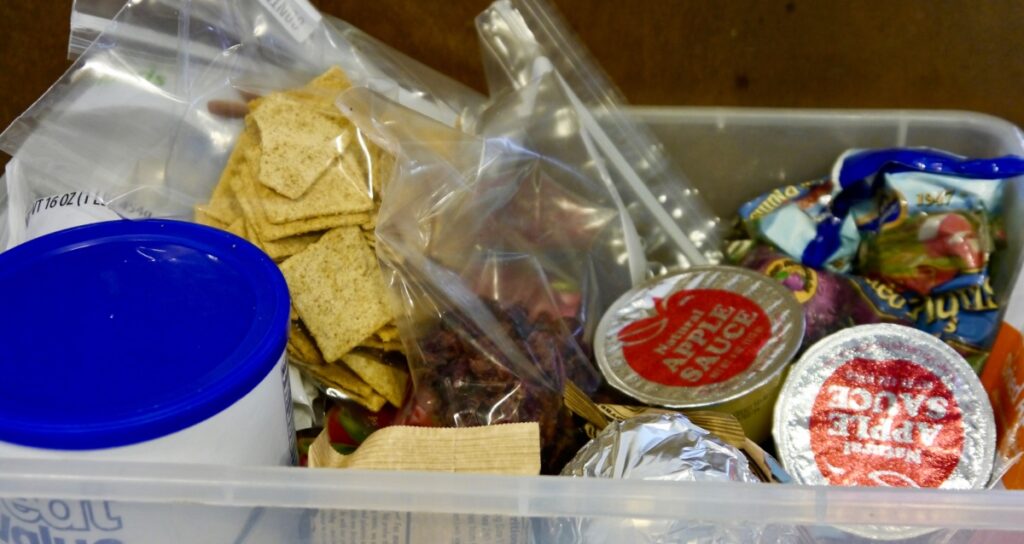
You may think snacking is just a fun part of boating. But it’s actually a crucial part of cruising. Snacking keeps the crew healthy, staves off boredom, and protects provisions needed for other meals. And that’s just the beginning.
Why You Need a Snack Bin on Your Boat
Whether you’re dealing with fussy children or bored crew, a snack bin can solve several problems.
Prevents Light Seasickness
As long as your nausea isn’t too severe, a light, salty snack can help settle your stomach. Remember your parent giving you saltine crackers when you had an upset stomach? That old-fashioned remedy works just as well with seasickness. Of course, if you’re experiencing severe seasickness, you may need to take another approach.
Helps Hydration
You need to drink regularly while you’re sailing. But it can be difficult to convince everyone to keep up with their body’s hydration needs. Some foods, like fruits and vegetables, can add water to your body. Others make crew thirsty enough to seek out beverages on their own.
Tide Kids or Guests Over
If you’re cruising with children or visitors, you may find yourself in conditions where you’re unable to prepare a full meal. A light snack is a useful way to keep anyone onboard from getting too hungry until a full meal.
Averts Boredom During Watchkeeping
Ask any sailor on night watch, it’s more likely boredom drives them to snack than hunger. Cruiser Dave S. suggests that snacks that require peeling, like oranges and hard-boiled eggs, are good for this.
Keeps Crew From Eating Provisions
Whether you’re out for the afternoon or a week, it only makes sense to plan for snacks when you’re planning the food on board. Otherwise, you might be surprised to find dinner ingredients missing.
We began keeping a snack bin on our first boat, Que Tal. I filled a big plastic tub next to the companionway with various treats that anyone could eat without asking. Dave appreciated not feeling like a child who had to ask permission to eat something. I appreciated not becoming frustrated to find the cashews I needed for my cashew chicken recipe were gone. We carried the custom to our next boat, Barefoot Gal.
Most of all, snacks are just fun. And, when conditions are miserable, they can be a small hit of comfort.
Snacks to Keep on Your Boat
I prepared snacks in advance by dividing them into small plastic or silicone bags with a single serving each. A vacuum sealer also works well for this. You can also repurpose trash (old yogurt containers, plastic jars, etc.) for snacks. A few of our favorites for the snack bin:
Crackers
You can buy crackers in single-serve packets (Amazon) or divide them into servings. Peanut butter makes the snack more substantial, and single-serving packets (Amazon) are easy to handle in all conditions.
Fruit and Vegetables
Nature provides snacks in perfect packages. Oranges are especially good for fresh fruit. If you wrap them in foil, they stay good considerably longer.
Dried fruit, like raisins, cranberries, apricots, and mangoes, is also delicious and keeps a long time. Applesauce in individual serving cups (Amazon) is also good.
Of course, many people eat sweet carrots like fruit as well.
Nuts and Trail Mix
You can get a variety of nuts in single-serving packages (Amazon). Unshelled nuts, such as peanuts or pistachios, give the snacker something to do.
GORP (Good Old Raisins & Peanuts) is a favorite of Scouts. In rough weather, it can even stand in for meals, such as on our “rambunctious” sail from the Bahamas to Florida. I put GORP into plastic bottles that fit into the drink holder on the steering pedestal, and then we’d just grab a handful at a time. A good mix is roughly equal parts peanuts, raisins, and M&M’s, but you can use other dried fruit bits and other small candies as well (things that don’t melt in your hand are best).
Olives and Other Savory Snacks
You can find olives in single-serving plastic packages (Amazon). These are great!
Nowadays, you can find a variety of beef jerky (Amazon) that is far tastier than gas station options. You can even buy shelf-stable, “crunchy” cheese (Amazon).
Sweets
Individual packages of cookies, particularly ginger snaps (ginger is a natural seasickness preventive), are appreciated on board. Many of your favorite cookies come in individual serving sizes (Amazon).
Although some people describe them as health food, granola bars fit better in the sweet category. They are a terrific addition to any snack bin.
Snacks to Avoid
Snacks should be as simple and self-contained as possible. Foods that take more “making,” such as dips or hot treats, are better left as appetizers or accompaniments for sundowners.
Eating on a Boat
Cooking, and yes, eating, is different on a boat. It’s why The Boat Galley Cookbook is a great addition to any cruising vessel. With over 800 recipes that you can make onboard as well as tips about substitutions and storage without refrigeration, it’s the kind of information that will keep you and your crew eating well. After all, good meals go with good times.
What are your favorite snacks? Let me know in the comments.


Carolyn Shearlock has lived aboard full-time for 17 years, splitting her time between a Tayana 37 monohull and a Gemini 105 catamaran. She’s cruised over 14,000 miles, from Pacific Mexico and Central America to Florida and the Bahamas, gaining firsthand experience with the joys and challenges of life on the water.
Through The Boat Galley, Carolyn has helped thousands of people explore, prepare for, and enjoy life afloat. She shares her expertise as an instructor at Cruisers University, in leading boating publications, and through her bestselling book, The Boat Galley Cookbook. She is passionate about helping others embark on their liveaboard journey—making life on the water simpler, safer, and more enjoyable.
Leave a Reply