

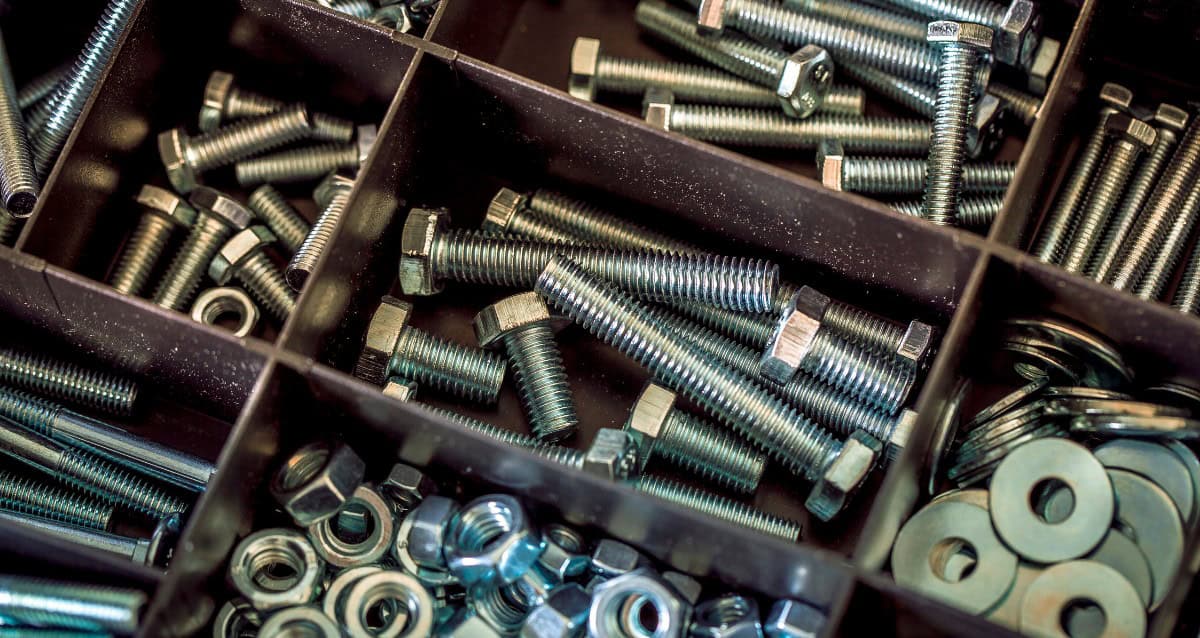
The boat spare parts worth carrying are the ones for systems you can’t do without and the parts most likely to fail: pumps, belts, impellers, filters, hose and fittings, wire and fuses. Skip spares for anything you can live without, jury-rig, or easily buy where you’ll be cruising.
No list fits every boat, but here’s what we carried on Barefoot Gal, what we actually needed, and what it all cost.
Two Boats, Two Extremes
We didn’t realize how well stocked our first cruising boat, Que Tal, was when we bought her. She was in Mexico, and the previous owner had just brought her down from the US, fully stocked with spares. We spent four days just inventorying what was in the lockers. For years after, we only had to replace things as we used them.
Barefoot Gal had almost nothing aboard. We brought a lot of tools when we moved aboard, and my first Amazon order was things like wire crimpers and PB Blaster. Cruising in Florida, we were always near stores, so we built up spares gradually as we did projects. Getting ready for our first trip to the Bahamas is when we got serious about it.
How We Decided What to Carry
It’s a balancing act. You want to be able to repair critical systems, or at least have a backup for them. But space and money are limited. As Dave put it, “We can’t just tow a whole spare boat around.”
There are stores in the Bahamas, and you can have parts shipped in, but it’s expensive and slow. So we aimed for the middle: parts and supplies for the most likely problems, and for anything that would have to be fixed, but not spares for everything. We knew from experience that a lot of gear can be done without or jury-rigged until you reach a store. (More on that in Have a Plan for When Gear Breaks.)
Deciding took time. We went over the boat system by system and asked what we’d need to keep each one going.
What We Carried on Barefoot Gal
Every boat is different, so treat this as a starting point, not a definitive list for your boat:
- Freshwater system: spare hose (all ours was 1/2″, which made it easy), hose clamps, a variety of connectors, the Y valve for tank selection, and a spare water pump
- Dinghy and outboard: Hypalon patches and G/flex epoxy, which is far better than Hypalon glue because it tolerates heat and humidity, and it’s useful for plenty of other repairs aboard (here’s how we patched our dinghy with it); also a spare valve, spare prop, impeller, spare kill cord, and spare fuel hose with fittings
- Diesel engine: spare raw water pump and seals, two spare fuses, solenoid relay, spare fuel pump, and two alternator belts
- Autopilot: spare belt
- Sails and rigging: sail repair tape, thread, needles, extra blocks, shackles, and line
- Propane stove: spare solenoid and regulator
- Electrical: plenty of spare wire, connectors, and fuses
- Anchor light: a spare. If you’ve used a Davis Mega Light, the LED light so many cruisers hang from the boom as an anchor light and cockpit light, you may have wondered where to get one now. Davis no longer makes it, but this Utility LED Anchor Light is the updated version: same idea, LED, plugs into a 12-volt socket, and turns itself on at dusk and off at dawn.
Other cruisers also carry a spare starter, an oil pressure switch and sender, and a spare shift cable.
What we didn’t carry: a spare alternator. Nothing on our boat ran directly off it, and we had both solar and a generator to charge the batteries. In our experience, anywhere there are cars, there’s someone who can rewind an alternator or sell you one.
Consumables and Repair Supplies
Then there are the consumables: engine oil, filters (oil, fuel, and water), coolant, coconut coir for the composting head, battery water, WD-40, and more. For the Bahamas, we took enough of some for the whole trip, and enough of others to get by until we could buy more there.
And there’s all the everyday repair stuff that’s just part of living on a boat: tools, screws, bolts, cable ties, and a roll of Rescue Tape.
What We Actually Used
Our list held up. In four months in the Bahamas, we never ran short of anything important, and plenty of it never came out of the locker. Here’s what we did need:
- Alternator belt. It broke underway. On our boat it also drove the cooling water pump, so the high-temperature alarm went off within minutes. With spares aboard, it was a simple fix.
- Diesel fuel pump. Ours died at Gun Cay as we were leaving the Bahamas. We put in the spare, then bought another once we were home.
- Dinghy fuel hose. It cracked after we snorkeled Thunderball Grotto. Rescue Tape got us back to the boat, and our spare hose and fittings fixed it for good.
- Racor fuel filters. Water got into one of our fuel tanks, and we went through filters fast. We ended up buying five more in the Bahamas at $38 each for the same filters that cost us $14 each in the US.
- Rechargeable batteries. A dead one stopped one of our solar vents. A fresh one from our spares fixed it.
The trip also added a few things to our list: spare O-rings for the deck fills, a rebuild kit for the hydraulic drive leg, extra USB cords, and a spare fan for the composting head. Here’s everything that broke in those four months, and how we handled it.
What Spares Cost
Spare parts can be a real budget buster in your first year of cruising, and they rarely show up in articles about what a boat really costs. Dave and I figured our spares were worth $7,000 to $10,000; at today’s prices, that’s probably $10,000 to $15,000. That’s just parts and supplies, not tools. When I asked cruising friends, their estimates ran from $3,000 to $10,000.
It gets easier after the first year. You replace spares as you use them, and you rarely use them all in one year. If you’re mostly staying in your home waters, you can buy what you need as you need it; that’s what we did our first year on Barefoot Gal.
If you’re shopping for a boat, ask what spares come with each one, and factor that into your offer. Que Tal‘s full lockers saved us thousands. Barefoot Gal‘s empty ones cost us that much, and more.
Make Your Cruising Money Go Further
Spares are one of many costs that are easy to underestimate. Our course, Cruise Farther, Spend Less, helps you understand what cruising really costs and cut those costs in ways that still support the life you want aboard.
From The Boat Galley Store
Cruise Farther, Spend Less (online course)
Make cruising financially sustainable by understanding your real costs and making smart, freedom-giving choices
- See how different boats, systems, and upgrades change your long-term expenses
- Understand where the money really goes in day-to-day cruising life
- Cut costs in ways that still support the life you want aboard
- Explore realistic ways to earn while cruising
Keep reading

Carolyn Shearlock has lived aboard full-time for 17 years, splitting her time between a Tayana 37 monohull and a Gemini 105 catamaran. She’s cruised over 14,000 miles, from Pacific Mexico and Central America to Florida and the Bahamas, gaining firsthand experience with the joys and challenges of life on the water.
Through The Boat Galley, Carolyn has helped thousands of people explore, prepare for, and enjoy life afloat. She shares her expertise as an instructor at Cruisers University, in leading boating publications, and through her bestselling book, The Boat Galley Cookbook. She is passionate about helping others embark on their liveaboard journey, making life on the water simpler, safer, and more enjoyable.
Some links in this article (including all Amazon links) are affiliate links, meaning that we earn from qualifying purchases.