
Ugh, you’ve got bugs in the flour on your cruising boat! Those little red or black dots, crawling everywhere, are a nightmare. But they’re there, so what do you do?
Bugs and Boat Galleys
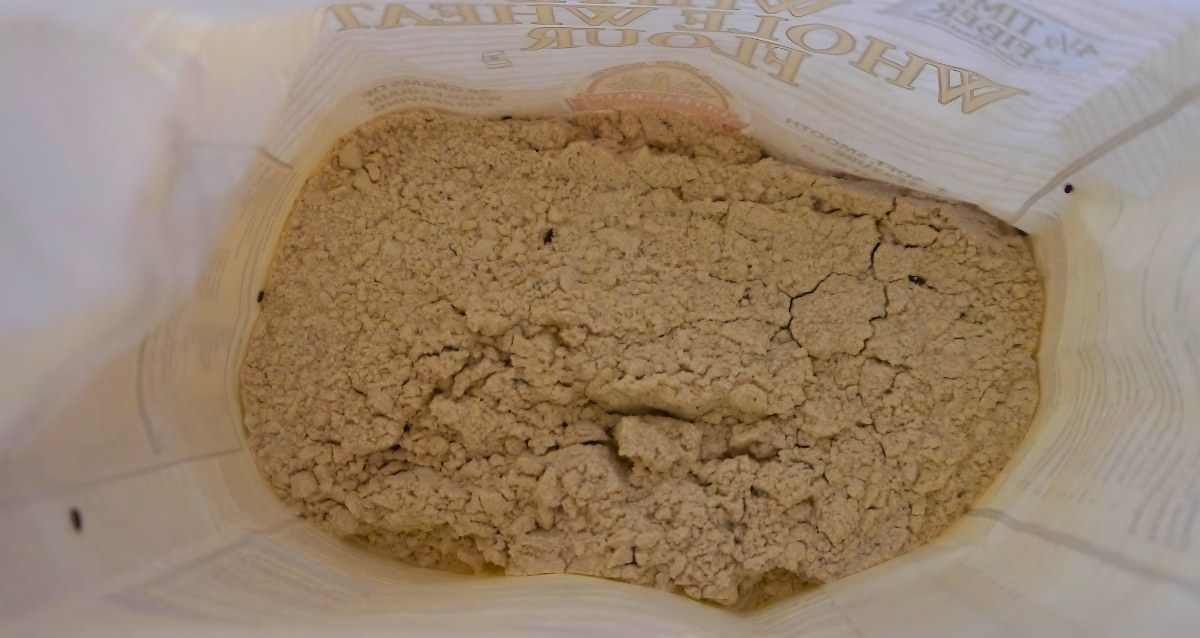
No matter what precautions you take, and no matter how carefully you store your flour, it’s likely you’ll have bugs someday. I had stored my bag of flour inside a Ziploc with a few bay leaves. But someone failed to seal the Ziploc completely. Voila! The bugs discovered a new home.
If you follow these steps exactly, you can reclaim your boat galley from critters.
Step 1- Get Bugs Off The Boat
Remove those bugs. Don’t just put them into a trash bag. No, you need to remove them from the boat and discard them onshore. While old-time sailors would eat wormy flour (an extra source of protein), if you leave it on the boat, the bug problem will spread. Yes, I know that some people will say you can salvage the flour by sifting it to remove the bugs. That doesn’t remove the eggs, and you’ll be fighting a losing battle as the next generation arrives. Get rid of it if you want to end the problem.
Step 2 – Examine Food Nearby
Go through all the other containers in the same locker and adjacent lockers. Check everything for bugs. Don’t forget to check any baking mix (“Bisquick”), box mixes, and other packages. Pitch anything with bugs. (I know, it hurts).
If the buggy food was in a good plastic storage container, pour out the flour or mix. Immediately wash out the plastic container with a bleach solution. If it was in a Ziploc, throw it out. Don’t try to reuse the bag.
Step 3 – Clean Containers
Take every item out of the affected lockers. Wash the outside of each with a bleach solution before setting it down elsewhere. If you don’t disinfect the outside first, before setting the containers down, you can transfer eggs and perpetuate the problem.
Step 4 – Clean the Locker
Carefully wipe out all the affected lockers with a bleach solution. Clean every single surface. If you can’t use bleach because of fabric nearby, use either ammonia or vinegar. Don’t mix them, and the stronger the solution, the better.
Hannah G. wipes her lockers down with tea tree oil. And several cruisers also recommend leaving pantry moth traps (Amazon) behind. I’ve never needed them using the methods I’ve described. But they are another option.
Step 5 – Dry Lockers And Plan For The Future
Dry out the lockers and the containers. Add a few more bay leaves to each “non-buggy” container, as an added precaution, and toss a few bay leaves into each locker.
Every cruiser has their own favorite tip. Many recommend freezing grains as soon as you bring them aboard. Freezing will kill bugs in all life stages. However, you need to freeze items for anywhere from three days to a week at 0° F (-18 C). Most boat freezers cannot sustain these temperatures, particularly in the tropics. And many cruisers do not have that amount of freezer space to spare.
John T. suggests getting dry ice from a local ice cream supplier (if you can find one). Put a chunk in the box containing every plastic pack of weevil-loving pasta, flour, or rice. Let it start “smoking” over the lip of the container and seal it. No weevils (or any other bugs) can survive or breed in a carbon dioxide environment devoid of oxygen.
Cruiser Cyndi moves flour to stainless steel canisters and lets them sit in the sun on deck for three days before storing them below.
Step 6 – Put Everything Back and Stay Vigilant
Now that everything is clean and dry, you can put everything back in place. You’re in much better shape moving forward.
Perhaps most importantly, keep a sharp eye out over the next several weeks for any lingering bugs. If you see any, take immediate action to avoid an even larger infestation. And make sure you store items safely moving forward.
I’ve had good luck storing items in plastic lock and lock containers (Amazon).
While bugs are more likely in flour purchased from barrels and in small villages, they can be found almost anywhere. Don’t ignore it if you see even just one. Where there’s one, more are certainly nearby!
Learn More
Trying to figure out this whole “cooking on a boat” thing? Let us help you with two online courses and a cookbook designed just for boat kitchens (over 800 boat-friendly recipes!):
- The Boat Galley Cookbook
- Provisioning, Meal Planning, and Food Storage
- Eating Well With A Tiny Fridge

Carolyn Shearlock has lived aboard full-time for 17 years, splitting her time between a Tayana 37 monohull and a Gemini 105 catamaran. She’s cruised over 14,000 miles, from Pacific Mexico and Central America to Florida and the Bahamas, gaining firsthand experience with the joys and challenges of life on the water.
Through The Boat Galley, Carolyn has helped thousands of people explore, prepare for, and enjoy life afloat. She shares her expertise as an instructor at Cruisers University, in leading boating publications, and through her bestselling book, The Boat Galley Cookbook. She is passionate about helping others embark on their liveaboard journey—making life on the water simpler, safer, and more enjoyable.
Leave a Reply